Your cart is empty
Explore our collectionsCoupons
Order Summary
Total₹ 0

If you’ve ever scrolled a nursery website or in a local nursery, you’ve probably come across the terms “grafted fruit plants” and “seed-grown plants” used almost interchangeably — as if they’re the same thing. They’re not. And if you want to grow a fruit tree at home, the first thing you want to understand is the difference between grafted and seed-grown plants, which can save you years of waiting, disappointment, and wasted garden space.
In this guide, we’ll cover everything you need to know before buying a fruit plant, what the meaning of grafting is, how it compares to growing from seed, and why nowadays gardeners are choosing grafted saplings over the seed-grown route in India.
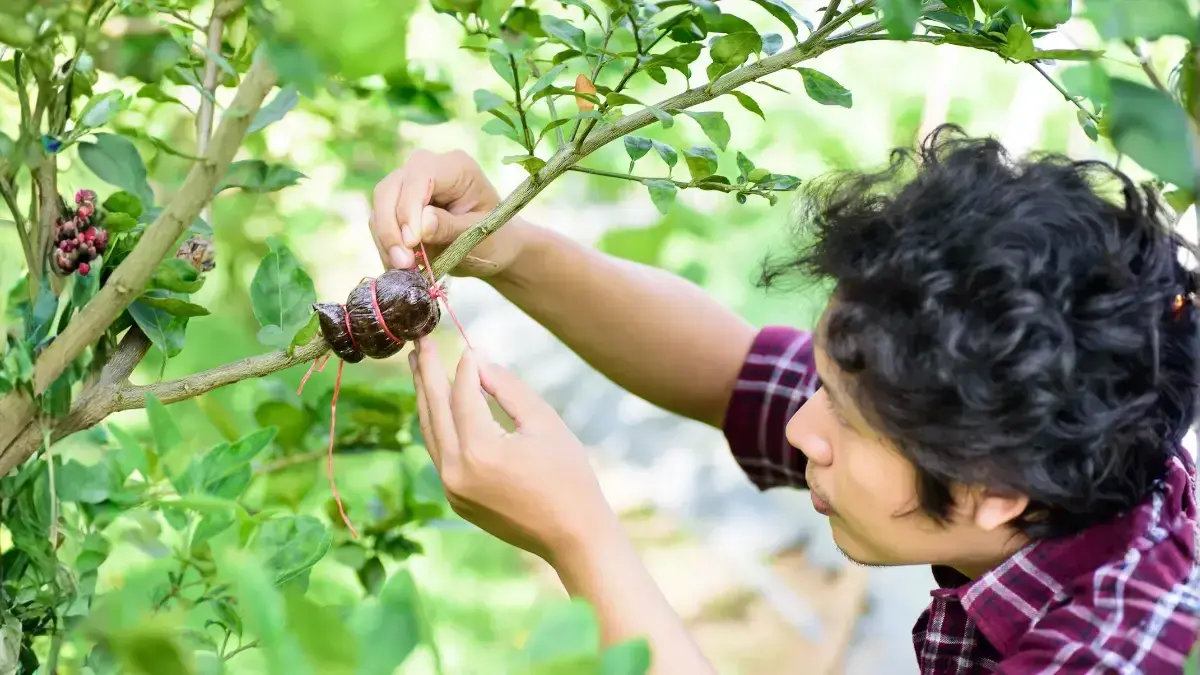
The meaning of the grafted fruit plants is simpler than it sounds. Grafting is a horticultural technique where a cutting (called a “scion”) from a mature, fruit-bearing tree of a known variety is attached to the root system (called “rootstock”) of another young plant. The two grow together and fuse into a single plant.
The result? A tree that combines the strong, disease-resistant roots of the rootstock with the exact fruiting characteristics of the parent tree, the scion was taken from. Essentially, you get a “cloned” copy of a tree that’s already proven to produce good fruit, just growing on a fresh root system.
This is very different from a plant grown naturally from a seed, where genetics get reshuffled every generation, and you have no real guarantee of what you’ll end up with.
| Feature | Grafted Plant | Seed-Grown Plant |
| Fruiting Time | 1–4 years | 5–12 years |
| Fruit Quality | Same as parent | Unpredictable |
| Tree Size | Compact | Usually, larger |
| Disease Resistance | Often better due to selected rootstock | Depends on genetics |
| Best For | Home gardens and containers | Experimentation and breeding |
Let’s look at why buying grafted fruit plants is such a common question among gardeners and farmers in India.
Grafted Mango – A grafted mango plant is a grafted variety, which means you get guaranteed sweet and juicy fruit. The grafted mango is a fast-growing plant that produces fruit in 2-3 years of planting. There’s nothing quite like biting into a mango and knowing exactly what you’re getting. That’s the beauty of a grafted mango tree — varieties like Alphonso or Dasheri, true to taste, without the six-year wait. Give it two to three years, and you’re picking fruit that tastes like the real deal, every single time.
Grafted Guava – Guava trees grown from seed are a gamble — sometimes sweet, sometimes bland, sometimes barely fruiting at all. A grafted guava skips that guesswork entirely. Within a year or two, you’re looking at a compact tree loaded with good fruit.
Grafted Lemon – Lemons are one of those trees people plant and forget about, hoping for the best. A grafted lemon changes that story. It stays small enough for a terrace pot, starts fruiting in under two years, and gives you juicy, tangy lemons that match the parent tree in every way — no surprises, just results.
Grafted Litchi – Ask anyone who’s grown litchi from seed, and they’ll tell you patience isn’t optional — it’s mandatory, for almost a decade. A grafted litchi plant cuts that wait down to three or four years, and the fruit that shows up tastes exactly like the Shahi or China variety it was cloned from.
Grafted Pomegranate – Pomegranates grown from seed can take years to show any real promise, and even then, the fruit rarely lives up to expectations. A grafted pomegranate plant flips that script — fruiting within about two years, staying compact enough for a home garden, and producing that deep red, juicy fruit you actually wanted.
Grafted Custard Apple – Custard apple is a fruit people either love or haven’t tried yet, and a grafted plant makes sure you get the good version. Within two to three years, you’ll have a manageable tree producing creamy, sweet fruit – none of the long wait or inconsistent quality that seed-grown trees are known for.
This is one of the most searched questions, and rightly so. How long the grafted fruit plants take to fruit depends on the fruit type, but here is a general idea:
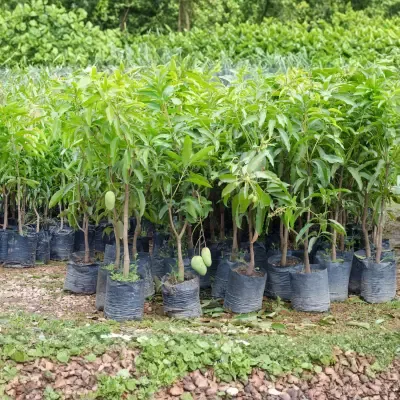
The comparison of a grafted mango plant vs seed mango is a classic example. A mango grown from seed may take 7 to 10 years to fruit, and there’s no guarantee the fruit will taste anything like the mango you ate the seed from. Mango seeds are genetically mixed, so the result is a surprise — sometimes sour, sometimes fibrous.
A grafted mango plant gives fruits in just 2 to 3 years and gives you the exact variety you chose, whether it’s Alphonso, Dasheri, or Langra.
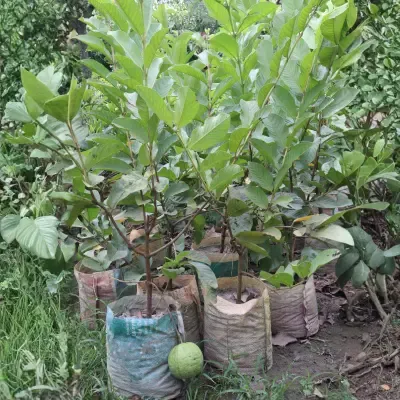
Guava is one of the easiest fruit trees to grow at home. A grafted guava plant starts producing fruit within one to two years, stays compact enough for small gardens and terraces, and gives sweet, consistent fruit that matches the parent variety, such as Allahabad Safeda or Thai Pink.
For citrus lovers, the grafted lemon plant’s fruiting time is usually around 1.5–2 years, whereas a lemon grown from seed can take 5–7 years and may not even produce true-to-type fruit.
Litchi is a slow fruit to begin with, so the difference matters even more. So now we talk about the difference between these plants. In a grafted litchi plant vs seed litchi tree, a grafted litchi plant fruits in about 3 to 4 years, and if we talk about a seed-grown litchi, then a seed-grown litchi tree can take 8 to 12 years, sometimes longer.
Pomegranate farming has grown a lot in recent years, and grafted pomegranate plants from Indian varieties are more popular for their deep red color and sweet taste. Grafted pomegranate plants give fruit in 1.5 to 2 years.
The grafted custard apple plant is gaining popularity because of its early fruiting and better fruit size. Varieties like NMK Golden, Arka Sahan, and Balanagar, when grafted, fruit within 2 to 3 years and give larger, sweeter fruit with fewer seeds compared to trees grown directly from seed.
A grafted plant usually shows a slight bend, bump, or scar a few inches above the soil line — this is the graft union. Seed-grown plants have a smooth, straight stem with no such mark.
For most home gardeners who want predictable fruit, faster yields, and manageable tree size, yes — grafted plants are the better choice. Seed-grown plants still have their place, particularly for breeding new varieties, rootstock production, or simply the joy of growing something unpredictable.
How to Care for Grafted Fruit Plants:
| Care Aspect | What to Do |
| Sunlight | 6–8 hours of direct sunlight daily. |
| Watering | Keep soil moist, not waterlogged; water regularly. |
| Fertilizer | Feed with compost or NPK every 2–3 months. |
| Protect Graft Union | Keep it above soil, dry, and undamaged. |
| Pruning | Trim dead/damaged branches after fruiting. |
| Mulching | Mulch base to retain moisture and control weeds. |
At Upjau, every grafted fruit plant is sourced from trusted nurseries and carefully selected for healthy growth. Whether you’re looking for mango, guava, lemon, litchi, or pomegranate plants, you’ll find healthy grafted saplings that are packed securely and delivered across India. If you want a mango tree that fruits in three years or a guava plant that thrives on your terrace, Upjau delivers healthy, well-rooted saplings straight to your doorstep, carefully packed to survive the journey.
Add in fair pricing, real customer support, and a growing catalog covering mango, guava, lemon, litchi, pomegranate, and more — and it’s easy to see why home gardeners across in India are choosing Upjau for their fruit-growing journey.
Frequently Asked Questions:
Grafted trees use a branch from a fruit-bearing tree, not a seedling. Since that branch is already mature, the new plant skips years of growing up and fruits much sooner.
Yes, the same. Since the grafted branch comes from the parent tree, the fruit it grows has the same taste, size, color, and quality as the original.
Yes, grafted plants are significantly more expensive than seed-grown plants, typically costing three to four times as much.
Yes, mostly. With proper care, grafted trees can live just as long as seed-grown ones, often 20 to 40 years, without any real difference in lifespan.