
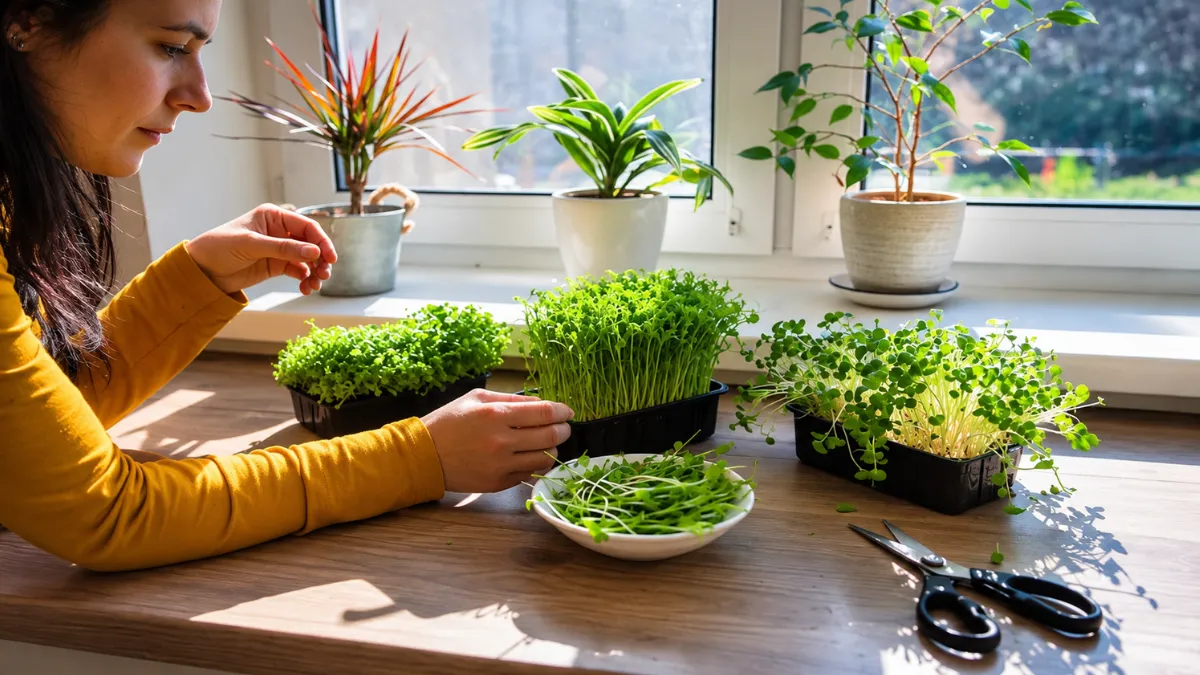
Winter in India can be dull for gardeners. Mornings are foggy, days are short, and the balcony plants slow down. But you don’t have to stop growing. Microgreens to grow indoors in winter are a great way to keep your green habit alive, even if you live in a small flat or a apartments.
Microgreens are tiny baby plants that you harvest within 7 to 14 days. They need very little space, very little money, and almost no gardening experience. If you are looking for easy microgreens for beginners, this guide is for you.
Why Grow Microgreens in Winter?
Many people think winter microgreens in India are hard to grow. The truth is the opposite. Most microgreens like cool weather. In summer, seeds often rot or grow mold because of heat and humidity. In winter, the room temperature of 15°C to 25°C is just right.
Here is why indoor winter gardening in India works so well with microgreens:
- They grow fast, so you see results in a week
- You can grow them in small spaces, like a kitchen shelf or window
- They are full of nutrients, which is great when fresh vegetables get costly
- You get fresh greens without going to the market
What You Need to Start
You don’t need fancy things. Here is a simple list:
- Seeds (buy seeds made for microgreens, not random packets)
- Trays with holes (old plastic boxes or food containers also work)
- Cocopeat or garden soil
- A spray bottle for water
- A sunny window, or a cheap LED grow light
How to Grow Microgreens Indoors?
This method works for almost every seed on this list.
- Fill the tray: Add 1 to 2 inches of coco peat. Press it flat and wet it lightly.
- Soak the seeds: Big seeds like peas need soaking. Small seeds like lettuce don’t.
- Spread the seeds: Sprinkle them evenly on top. Don’t pile them up. Seeds should just touch each other.
- Mist the seeds: Spray water until the seeds look wet, not floating.
- Cover and wait: Put another tray or a plate on top for 2 to 3 days. This is the dark phase, and it helps seeds sprout well.
- Give light: Once you see small sprouts, remove the cover and move the tray near light.
- Water daily: Mist once or twice a day. Better still, water from the bottom so the leaves stay dry.
- Harvest: Cut with scissors just above the soil when the first true leaves show.
How to Grow Microgreens in Cocopeat
Cocopeat is the easiest base for beginners. It is light, clean, holds water well, and is easy to find in India. Always rinse it first to remove salt, and keep it damp, not soggy. Reuse is possible, but for best results, use fresh cocopeat for every batch.
What are the easiest microgreens to grow at home?
1. Broccoli Microgreens
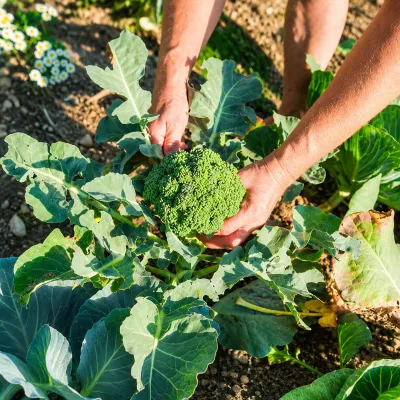
Broccoli is one of the best microgreens to grow at home in India. It is crunchy, mild, and very healthy.
How to grow broccoli microgreens at home?
- Soak seeds for 4 to 6 hours
- Spread them on wet coco peat
- Keep covered for 2 days
- Give bright light after sprouting
- Harvest when leaves turn dark green
Time to harvest: 8 to 10 days
Tip: Broccoli handles cold weather very well, so it is perfect for winter. It is also one of the best microgreens to grow in cold weather.
2. Kale Kalefetti Mix Microgreens
Kalefetti is a colourful kale mix. The leaves come in green, purple, and red shades, so it looks beautiful on a plate.
How to grow Kale Kalefetti microgreens at home?
- Soaking is optional
- Sprinkle seeds evenly on damp cocopeat
- Cover for 2 to 3 days
- Place near a window for 4 to 5 hours of light
- Harvest once the colour looks bright
Time to harvest: 8 to 10 days
Tip: Don’t overwater. Kale stems turn weak if the soil stays too wet. Use it in salads, sandwiches, and smoothies.
3. Pea Shoots Microgreens
Pea shoots taste sweet and fresh, almost like fresh peas. They are also a good choice if you want more quantity, because the plants grow taller and thicker.
How to grow pea shoots microgreens at home?
- Soak seeds for 8 to 12 hours (this is important)
- Use a deeper tray with 2 inches of cocopeat
- Spread seeds close together
- Cover for 3 days
- Water once a day and give light after sprouts come up
- Harvest at 4 to 6 inches
Time to harvest: 10 to 14 days
Tip: Pea shoots like cool weather, so winter is their best season. They also grow nicely with less sunlight, which makes them one of the low-light microgreens for indoor growing.
4. Radish Microgreens
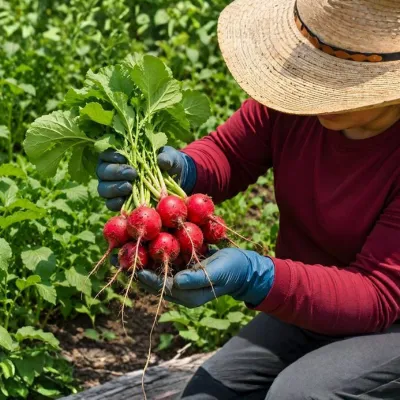
Want results fast? Pick radish. This is one of the fastest-growing microgreens in India and the best starter crop for anyone new to this.
How to grow radish microgreens at home?
- Spread on wet cocopeat
- Cover for 2 days
- Keep in the light after sprouting
- Harvest when stems turn pink or red and leaves open up
Time to harvest: 5 to 7 days
Tip: Radish has a slightly spicy taste, like a mini radish. Add it to parathas, sandwiches, or poha. It can also be grown in dim places, so it works well in rooms with less light.
5. Lettuce Microgreens
Lettuce is soft, mild, and gives a nice crunch. Kids usually like it because it is not bitter.
How to grow lettuce microgreens at home?
- Sprinkle seeds on top of damp cocopeat
- Don’t cover them with soil, since lettuce seeds need light to sprout
- Cover the tray lightly with a cloth for a day or two to keep moisture
- Mist gently, because the seeds are tiny
- Harvest when leaves are 1 to 2 inches tall
Time to harvest: 8 to 12 days
Tip: Lettuce likes a cool room, so winter is perfect. Use bottom watering to avoid washing the seeds away.
6. Fenugreek (Methi) Seeds Microgreens
Fenugreek seeds, or methi dana, are found in almost every Indian kitchen. That makes fenugreek microgreens at home one of the cheapest and easiest options to grow. The taste is mild, nutty, and slightly bitter, just like fresh methi leaves.
How to grow fenugreek microgreens at home?
- Soak seeds for 6 to 8 hours or overnight
- Spread them evenly on wet cocopeat
- Mist lightly and cover the tray for 2 to 3 days
- Move the tray to light once sprouts appear
- Mist once or twice a day
- Harvest at 2 to 4 inches with scissors
Tip: Use raw, whole seeds only. Roasted or very old seeds will not sprout. Fenugreek grows fast and does well in low light, so it is one of the best easy microgreens for beginners.
7. Flax Seeds Microgreens
Flax seeds microgreens at home are rich in nutrition and have a mild, nutty taste. Many Indian homes already have flax seeds, so this costs almost nothing.
How to grow flax microgreens at home:
- Don’t soak them, because flax seeds turn sticky and slimy in water
- Sprinkle dry seeds on damp cocopeat
- Mist lightly
- Cover for 2 days
- Keep the tray in an airy spot, since flax can grow mold easily
- Harvest at 2 to 3 inches
Time to harvest: 7 to 10 days
Tip: Use good quality seeds meant for sprouting. Roasted flax seeds will not grow.
How to Grow Microgreens Without Sunlight?
No sunny window? No problem. Here is how to grow microgreens without sunlight:
- Use a cheap LED grow light or a normal white tube light
- Keep the light 6 to 8 inches above the tray
- Keep it on for 10 to 12 hours a day
- Choose low-light microgreens like radish, pea shoots, and broccoli
Plants grown under artificial light turn out just as green and healthy.
Microgreens in Small Spaces, Apartments and Balconies
An indoor kitchen garden in winter doesn’t need a lot of room. Here are a few ideas:
- Stack trays on a small shelf or rack
- Use a corner of the kitchen counter
- Hang trays near the balcony door
- Start a new tray every 3 to 4 days, so you always have something ready to harvest
Even a single rack can give your family fresh greens every week, which is why microgreens to grow in apartments and balconies are becoming so popular.
Common Mistakes Beginners Make
- Too much water: This is the biggest reason for mold. Keep the soil damp, not wet.
- Too many seeds: Crowding stops air from moving.
- No air flow: Keep the room a little ventilated.
- Skipping the dark phase: Covering seeds for 2 to 3 days helps strong roots grow.
- Using the wrong seeds: Always buy from a reliable seller.
How to Use Your Microgreens?
Fresh microgreens taste best when eaten the same day. Add them to:
- Salads and sandwiches
- Parathas and rotis
- Soups, just before serving
- Smoothies
- Poha, upma, and omelettes
Start Growing Microgreens Indoors This Winter
Winter doesn’t have to mean no gardening. With just a tray, some cocopeat, and a handful of seeds, you can grow fresh food at home. Start with radish, since it is the fastest and easiest, then slowly try broccoli, kale, pea shoots, lettuce, flax, and mixed greens.
If you are new, don’t worry about doing everything perfectly. Your first tray may not look great, but your second one will be better. Soon, growing microgreens at home in India will feel as natural as making tea.
So pick up a tray this weekend and start your winter garden. Happy growing!
Frequently Asked Questions
1. Can you grow microgreens indoors in winter?
Yes, you can grow them. Microgreens like cool weather, and 15°C to 25°C is perfect. Just keep the tray near a window or under a light.
2. Which microgreens grow fastest in winter?
Radish is the fastest and is ready in 5 to 7 days. Fenugreek, broccoli, and kale follow closely and are usually ready within 7 to 10 days.
3. How long do microgreens take to grow in winter?
Most microgreens take 7 to 14 days. In very cold weather, they may need 2 to 3 extra days, so be patient and check daily.
4. What seeds can I use for microgreens in India?
You can use radish, broccoli, kale, pea, lettuce, flax, and fenugreek seeds. Always choose raw, untreated seeds from a trusted seller, and avoid roasted ones.
5. How often should you water microgreens in winter?
Mist once or twice a day. In winter, the soil dries slowly, so check first. Keep it damp, not soggy, to avoid mold.
