

Every year, the day after Diwali, millions of homes across India light lamps, build small hills cow dung, and people prepare a feast for Govardhan Puja. But have you ever wondered why Lord Krishna asked an entire village to worship a mountain instead of a god? The answer is more relevant today than ever. As we get ready for Govardhan Puja 2026, this festival reminds us that nature is the real giver of life, and that protecting it is a form of devotion.
In this guide, we’ll look at the true meaning of Govardhan Puja, the message Krishna gave through the story, and the best plants for Govardhan Puja, from Tulsi and marigold to hibiscus, Aparajita, money plant and jade plant, that you can grow, offer or gift this festive season, even if you only have a small balcony.
When Is Govardhan Puja in 2026?
This year, Govardhan Pooja celebrated on Tuesday, November 10, according to most panchangs. A day or so after Diwali, families across India remember the moment Krishna held up the Govardhan hill on one little finger to shelter Braj from Indra’s storm. That is why the festival is also called Annakut.
What Message Did Krishna Give Through Govardhan Puja?
The people of Vrindavan used to worship Indra, the god of rain, out of fear that he would punish them if they didn’t. Krishna asked a simple, practical question: who actually feeds us?
The answer was right in front of them. The Govardhan hill gave grass to the cows, water to the streams, and shelter to the forests. So Krishna suggested they thank the hill, the cattle and the land that truly sustain them.
Indra was furious and sent a storm. Krishna lifted Govardhan, and everyone took shelter under it. Here is what the story teaches:
- Gratitude over fear: Worship should come from thankfulness, not from being scared.
- Nature is the real provider: Rain, soil, forests and animals keep life going.
- Facing a crisis together: The whole village held the hill with their sticks while Krishna held it up.
- Ego has no place: Indra’s pride was broken. Humility, not power, is what lasts.
The Motive Behind Lifting the Mountain: A Message to Protect Nature
Krishna’s motive was never to show off his strength. He wanted to protect Braj, but he also wanted people to see a deeper truth. Govardhan Puja nature worship says that the mountain, the river and the cow are not resources to use up. They are family to care for.
Krishna conveyed this messagethrough a story and an action, which is why it has stayed alive for thousands of years. Even today, when nature is under stress, with floods, heatwaves and polluted air. Saving nature is saving ourselves.
Govardhan Puja and Nature: Why Environmental Protection Matters
Nature leaves a huge mark on our lives. It shapes the food we eat, the air we breathe, the weather we live through and even our mood. That’s why Govardhan Puja and the environment belong together. You don’t need a mountain to follow Krishna’s message. Small daily habits do the same work:
- Plant and look after at least one green thing.
- Save water and avoid plastic during festival décor.
- Use clay diyas and natural colours.
- Feed cows and birds, and keep water out for them.
- Share the Annakut with neighbours
This year, Plant a sapling, start a balcony garden, or gift a plant to someone you love.
Which Plants Are Used in Puja?
If you’re wondering which plants are used in puja, here are the most popular plants for Govardhan Puja and everyday worship. These are also the easiest plants for puja at home, and many of them double as puja flowers to grow at home. Each has a symbolic meaning, which is why they hold a special place in our traditions.
1. Tulsi Plant for Puja
In Vaishnava tradition, Tulsi (Holy Basil) is regarded as Goddess Vrinda and is very dear to Vishnu and Krishna. A bhog offered to Krishna is traditionally considered complete only with a Tulsi leaf on it.
- Symbol: Purity, devotion and protection of the home.
- Why grow it: It’s hardy, fragrant and easy to maintain, and Ayurveda values it too.
If you can’t find a healthy sapling nearby, you can buy a Tulsi plant online from trusted nurseries. Rama and Shyama Tulsi both work well for puja.
2. Marigold Plant for Puja (Genda Plant)
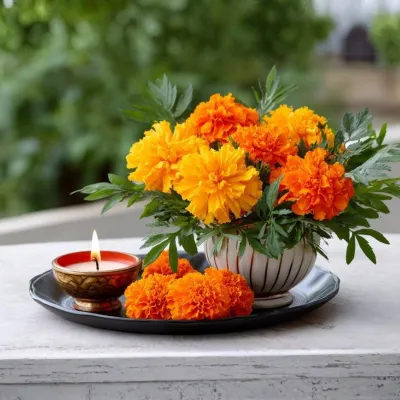
When people ask which flowers are offered to Lord Krishna, marigold is always on the list, along with lotus, jasmine and other seasonal blooms. The marigold plant for puja, called the Genda plant in Hindi, is a festival favourite.
- Symbol: Auspiciousness, positivity and the warmth of celebration.
- Why grow it: It flowers abundantly and gives you fresh garlands and toran material for Diwali and Govardhan Puja.
You can buy a marigold plant online that is already in bloom.
3. Hibiscus Plant for Puja (Gudhal Plant)
The hibiscus plant for puja, known as the Gudhal plant, has bright red flowers that are widely used in worship, especially for Goddess Durga and Kali and for Lord Ganesha.
- Symbol: Strength, devotion, and vitality.
- Why grow it: One healthy plant can give you fresh flowers almost daily.
4. Aparajita Plant for Puja
The Aparajita plant for puja (butterfly pea) is a climber with deep blue flowers. The name means “undefeated,” and it is linked with Goddess Durga and Lord Vishnu’s worship.
- Symbol: Victory, protection and humility.
- Why grow it: It climbs a balcony grill beautifully and flowers again and again.
5. Money Plant for Diwali
The money plant for Diwali is a popular festive gift. In Vastu tradition it is believed to invite prosperity, and its trailing vines are a sign of growth.
- Symbol: Wealth, growth and good fortune.
- Why grow it: It survives in low light and grows in water or soil.
6. Jade Plant for Good Luck
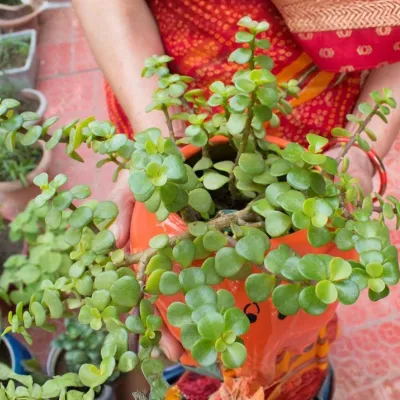
The jade plant for good luck is a succulent that Feng Shui associates with wealth and lasting friendship. A jade plant gift for Diwali is compact and long-lived, and it needs very little care.
- Symbol: Luck, steady prosperity and long-term growth.
- Why grow it: It stores water in its leaves, so it handles missed watering well.
Best Plants to Gift on Govardhan Puja
Looking for the best plants to gift on Govardhan Puja? A plant is a gift that grows along with the relationship, and it carries the festival’s message. Some easy pairings:
- Elders and family: Tulsi, for its spiritual value.
- Friends and colleagues: Money plant or jade plant, because they are easy to maintain.
- A new home or newlyweds: Marigold or hibiscus, for cheer and colour.
- Someone starting something new: Aparajita, for victory and protection.
You can buy puja plants online in India from nurseries that deliver healthy, well-packed saplings to your door, which saves effort when Diwali week is already busy.
Why Buy Puja Plants Online from Upjau?
Festival weeks are busy, and finding a healthy Tulsi or a flowering Genda in a crowded local nursery isn’t always easy. That’s where ordering from a dedicated online nursery helps. If you want to buy puja plants online in India, here is why Upjau is worth a look:
Plants for every puja need: Upjau lists outdoor plants such as hibiscus and marigold. You can also look for the Tulsi plant for puja and a money plant for Diwali in the same place.
Free delivery above ₹399: Upjau offers free delivery on orders above ₹399, so you can pick up the plants according to your choice
Pan-India delivery: The plants are hand-nurtured for freshness and shipped safely across India. Whether you live in a metro or a smaller town, the healthy plants arrive at your door.
Healthy roots and safe packaging: Upjau provides healthy roots, safe packaging and fast delivery, which matters when you are gifting a plant and want it to arrive in good shape.
Small plants for small spaces: Indoor plants on the site start from just ₹39, so it’s easy to build a compact green corner on a balcony
Bulk orders for gifting: Upjau also supports bulk purchases of saplings for schools, corporate offices, and residential communities. That’s handy if you want to give plants to colleagues, neighbours or a society Govardhan Puja programme.
Frequently Asked Questions:
1. Which flowers are offered to Lord Krishna?
Marigold (Genda), lotus, jasmine and Parijat are commonly offered to Krishna, along with Tulsi leaves.
2. Why is Tulsi important in Krishna puja?
Tulsi is considered Goddess Vrinda and is very dear to Krishna. A bhog is traditionally complete only when a Tulsi leaf is placed on it.
3. Which plants are used in puja?
Tulsi, marigold, hibiscus (Gudhal) and Aparajita are the most common puja plants. You can grow all the plants well in pots, even on a small sunny balcony.
4. Can I grow puja plants in a small space?
Yes. A sunny balcony or windowsill is enough for Tulsi, Genda or hibiscus.
5. What are the best plants to gift on Govardhan Puja?
Gift Tulsi to elders, money plant or jade plant to friends and colleagues, and marigold or hibiscus for a new home. Plants also support nature.
