
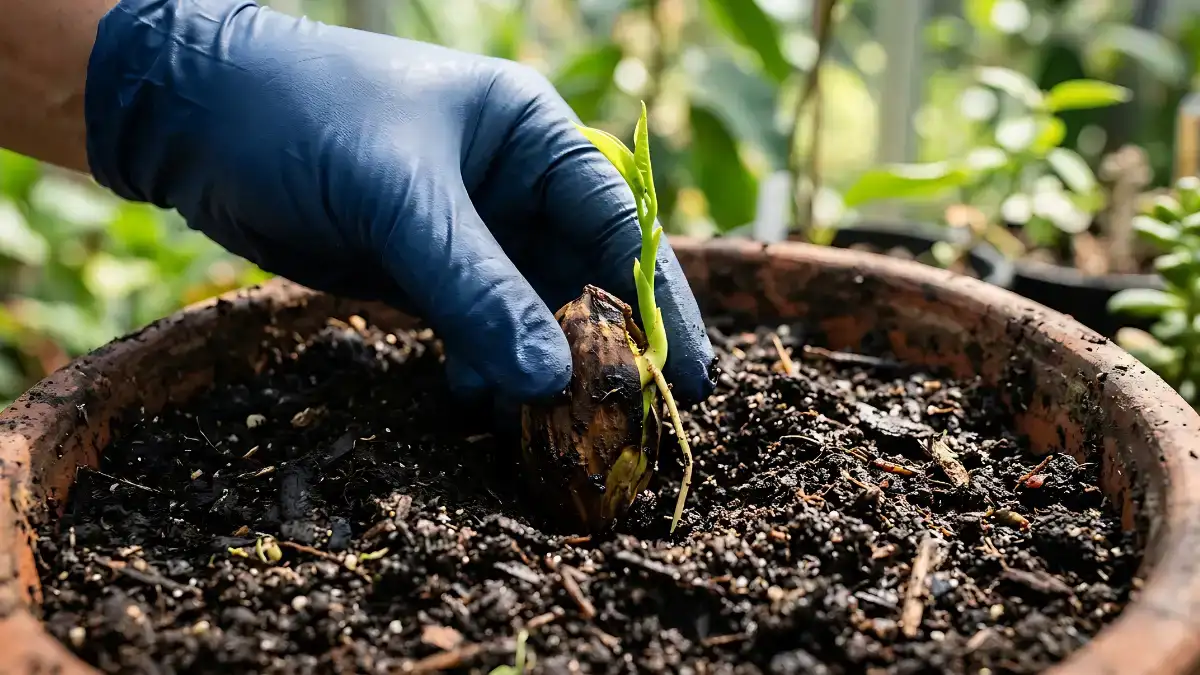
Mangoes are not just fruits; they’re royalty in India. People have been growing Mangifera indica for something like 4,000 years, and to be honest, it’s just woven into almost everything here: food, culture, and all those summer memories. You’ll catch Alphonso in Maharashtra, Langra and Dussehri up north—every state has its die-hard fans.
But wait, have you ever thought about raising your own mango seedling or grafted mango plant at home? It’s totally doable. And hey, before you think, “How will I plant mango seedlings or grafted plants in this small balcony and get mangoes?”—relax. Even if all you’ve got is a balcony, terrace, or a sunny corner, you can successfully grow mango seedlings in pots with the right care. This beginner-friendly guide will show you how to plant mango seedlings at home, care for them, and help them grow into healthy fruit-bearing trees.
Can you grow a mango tree from a seed? Yes, you can. However, grafted mango seedlings or mango saplings are the better choice if your goal is to harvest fruits earlier. Seed-grown mango trees may take 7–10 years to bear fruit and may not produce the same variety as the parent fruit, whereas grafted mango seedlings usually start fruiting in 3–5 years with proper care.
Looking for healthy grafted mango plants? Explore our collection of premium mango plants, including All Time Mango plant, Chaunsa Mango Aam Plant and Dasheri Mango Plant, carefully grown for Indian home gardens and delivered safely across India.
Interesting Facts About Mango Plants
- India grows more mangoes than anywhere else in the world.
- If you treat a mango tree right, it’ll outlive you. One hundred years or more? It happens.
- Over 1,000 different mango varieties are grown across India.
- Mango leaves are widely used during festivals and religious ceremonies.
- Mango trees bloom with clusters of tiny fragrant flowers before fruits begin to develop.
- Mature mango trees provide excellent shade and are often passed down through generations.
- Some dwarf and grafted mango varieties are specially developed for growing in pots, terraces, and home gardens.
- Popular mango varieties in India include Alphonso, Kesar, Banganapalli, Totapuri, Langra, Chausa, Dussehri, Malda, and many more.
- At Upjau, you can buy healthy mango seedlings of popular varieties like All Time Mango or Dushari,, ideal for home gardens and terrace growing.
Mango Plant Care Table
| Care Factor | Requirement |
|---|---|
| Soil | Well-draining loamy soil. The best soil for mango seedlings is a mix of garden soil, compost, and coarse sand. |
| Water | Water deeply but avoid waterlogging. Keep the soil slightly moist during the early growing stage. |
| Sunlight | 6–8 hours of direct sunlight daily |
| Fertiliser | Organic compost, vermicompost, or a balanced NPK fertiliser |
| Pests | Watch for mealybugs, aphids, and scale insects |
| Pruning | Remove dead, diseased, and crossing branches annually |
| Maintenance | Keep the soil loose, mulch regularly, and ensure good drainage |
How to Grow Mango Seedlings in Pots (Step-by-Step)
Learning how to grow mango seedlings in pots is easier than many people think. Growing a healthy grafted mango seedling is the fastest way to enjoy home-grown mangoes. If you are wondering how to grow mango from seed at home, we’ve included that too.
Step 1: Get Yourself a Decent Pot
Find a pot at least 18–24 inches wide and deep with drainage holes at the bottom. A large container gives the roots enough room to grow and helps the seedling establish properly.
Step 2: Plant Your Mango Seedling
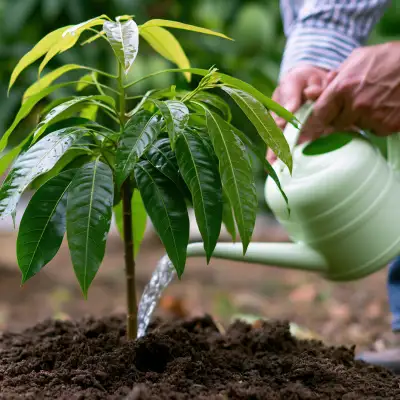
If you have purchased a healthy mango seedling or grafted mango plant, gently remove it from the nursery bag without disturbing the root ball. Place it in the centre of the pot, fill with well-draining soil, press lightly around the roots, and water thoroughly after planting.
OR
Step 2 (Optional): Grow Mango from Seed
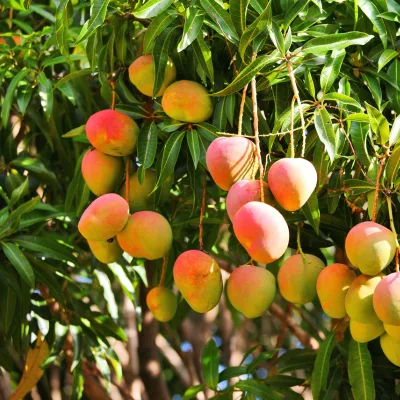
For those who want to grow mango from seed at home, use a ripe mango. Remove the fibrous outer husk carefully and take out the healthy inner seed.
Step 3: Mango Seed Germination (For Seeds Only)
Wrap the seed in a moist paper towel and keep it in a warm place. Within 1–3 weeks, roots usually begin to emerge.
Step 4: Mango Seed Planting Method
Once the seed sprouts, plant it sideways in moist potting mix with part of the seed slightly visible above the soil surface.
Step 5: Mango Seedling Development – Identify the Growth Stages
Whether grown from a seedling or seed, you’ll first notice root establishment, followed by reddish new leaves that gradually turn green. Healthy growth during the first few months is important for a strong future tree.
Step 6: Pot Cultivation
To keep your mango seedling healthy in pots, provide 6–8 hours of direct sunlight, water regularly without overwatering, and feed with organic compost every few weeks during the growing season.
For the best results in containers, choose dwarf or grafted mango varieties, as they fruit much earlier than seed-grown trees. While young mango seedlings can be kept in a bright location temporarily, they grow and fruit best outdoors in full sunlight.
Flowering of the Mango Plant
By late winter to early spring, you’ll notice clusters (scientifically called panicles, they’re basically big bunches) of tiny flowers in white, creamy yellow, or even pinkish shades. The scent? Sweet but not in-your-face, and bees and butterflies absolutely love it. Pollinators are pretty much the only way you’ll get fruit.
The mango flowering season in India generally starts between December and March, depending on the variety and local climate. Grafted mango seedlings usually flower much earlier than seed-grown trees, making them the preferred choice for home gardens.
To encourage blooming:
- Keep the tree in 6–8 hours of direct sunlight throughout the year.
- Skip heavy nitrogen fertilizer before flowering.
- Let the soil dry out slightly before spring (avoid overwatering).
- Switch to a phosphorus- and potassium-rich fertilizer during the flowering stage.
- Prune only after harvesting fruits, not before flowering.
- Grafted mango plants are usually quicker and more reliable for flowering and fruiting than seed-grown trees.
Wondering why your mango tree is not flowering? The most common reasons include insufficient sunlight, excessive nitrogen fertilizer, overwatering, young age (especially seed-grown trees), or pruning at the wrong time.
Common Problems & Easy Solutions
| Problem | Cause | Easy Solution |
|---|---|---|
| Yellow leaves | Too much water | Let the soil dry slightly and ensure proper drainage. |
| Slow growth | Nutrient deficiency | Apply compost or a balanced fertilizer during the growing season. |
| Leaf spots | Fungal infection | Remove affected leaves and spray a suitable fungicide if needed. |
| No flowering | Insufficient sunlight, excess nitrogen, or immature tree | Move the plant to full sun, reduce nitrogen before flowering, and be patient with young trees. |
| Flower drop | Temperature fluctuations, poor pollination, or moisture stress | Maintain consistent watering, avoid overwatering, and encourage pollinators. |
| Mealybugs | Pest infestation | Spray neem oil every 7–10 days until controlled. |
| Root rot | Waterlogged soil | Repot into a well-draining soil mix and reduce watering. |
Why Buy from Upjau?
At Upjau, the best site to buy plants online in India,every grafted mango seedling is carefully selected to help gardeners achieve better success at home. Whether you choose All Time Mango (Katimon) , Chaunsa Aam or Dasheri, you receive healthy, well-rooted mango seedlings that are suitable for Indian growing conditions and home gardens.
Why gardeners prefer Upjau:
- Healthy and well-established grafted fruiting plants
- Quality packaging for safe doorstep delivery across India
- Popular fruit varieties suitable for pots, terraces, and gardens
- Expert growing guidance for beginners
- Faster fruiting with grafted mango plants
- Suitable options for home gardens, balconies, and terrace cultivation
Growing a mango tree at home is honestly one of those slow-burn, crazy rewarding hobbies. You get the fragrance, the shade, and eventually the fruit—total win. Whether you start with a grafted mango seedling or grow a mango from seed, if you’re patient and follow the simple care tips in this guide, you’ll enjoy a healthy tree for years. If you’re ready to get started, buy healthy grafted mango seedlings online from Upjau and grow your own mango tree at home.
Frequently Asked Questions
When is the best time to plant mango seedlings in India?
The best time to plant mango seedlings in India is February to April or June to August (during the monsoon), when warm temperatures help the roots establish quickly. Avoid planting during extremely hot or cold weather.
Can I grow a mango tree from seed?
Yes, you can grow a mango tree from seed, but it may take 5–8 years or longer to produce fruit, and the fruit may not be true to the parent variety. If you want earlier and reliable fruiting, choose a grafted mango seedling.
How long does it take for a mango tree to bear fruit?
A grafted mango plant usually starts fruiting in 2–4 years, while a seed-grown mango tree may take 5–8 years or more, depending on the variety and growing conditions.
How to grow a mango tree faster?
Provide 6–8 hours of direct sunlight, well-draining, organic-rich soil, regular watering, and balanced fertiliser during the growing season. Grafted mango seedlings grow faster and usually start fruiting much earlier than seed-grown mango trees.
