Your cart is empty
Explore our collectionsCoupons
Order Summary
Total₹ 0

If you need a houseplant that is almost impossible to mess up, a Spider Plant (Chlorophytum comosum) is one of the best choices. Also known as the Green Spider Plant, Ribbon Plant, or Airplane Plant, it is one of the most popular indoor plants in India. You’ll find it in homes, offices, balconies, hanging baskets, and even kitchen windows. People love Spider Plants because they look beautiful, require very little maintenance, and can thrive even with occasional neglect.
Spider Plants are also well known for their air-purifying qualities. NASA’s Clean Air Study identified the Spider Plant as one of the indoor plants that can help improve indoor air quality. Besides adding fresh greenery to your home, it also produces adorable baby plantlets (spiderettes), making it one of the easiest plants to propagate. Whether you’re a beginner or an experienced plant parent, this Spider Plant care guide will help you grow healthy, thriving Spider Plants indoors.
Buy Spider Plant Online in India– Shop here!
| Care Factor | Requirement |
|---|---|
| Spider Plant Soil | Well-draining potting mix enriched with compost or organic matter |
| Spider Plant Watering | Water moderately, only when the top 1–2 inches of soil feel dry |
| Spider Plant Light Requirements | Bright, indirect sunlight. Avoid prolonged direct afternoon sun. |
| Fertilizer for Spider Plant | Apply a balanced liquid or NPK fertilizer once a month during the growing season |
| Pests | Watch for mealybugs, aphids, and spider mites. Treat early with neem oil if needed. |
| Pruning | Remove damaged, yellow, or brown leaves and trim old runners regularly |
| Maintenance | Maintain moderate humidity, wipe the leaves occasionally, and rotate the pot for even growth |
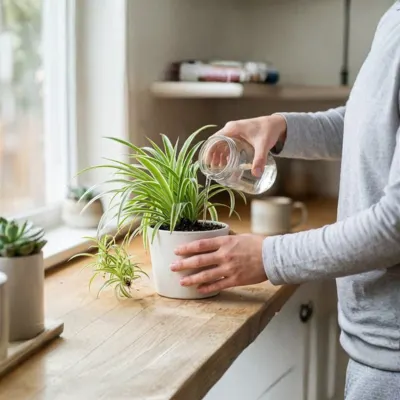
Choose a pot with proper drainage holes and fill it with a loose, well-draining potting mix. Place the root ball at the same depth as it was in the nursery pot, gently firm the soil around it, and water lightly after planting.
Spider Plant propagation: Spider Plants are rarely grown from seeds. The easiest way to propagate them is through their baby plantlets (spiderettes). Once the plantlets develop small roots, separate them from the mother plant and plant them in moist, well-draining soil. Keep them in bright, indirect sunlight, and within a few weeks, they will establish themselves. Avoid placing newly propagated plants in harsh direct sunlight or near AC vents, as this can stress the young plants.
Spider Plants produce small, white, star-shaped flowers on long arching stems once they mature. These flowers are followed by tiny baby plantlets (spiderettes), which make the plant even more attractive. Although the flowers are not fragrant, they add a delicate charm to hanging baskets and indoor spaces.
To encourage flowering, provide bright indirect sunlight, avoid over-fertilizing with nitrogen, and allow the plant to become slightly root-bound. Healthy plants grown under the right conditions will produce more flowers and runners throughout the growing season.
| Problem | Easy Solution |
|---|---|
| Spider Plant Brown Tips | Usually caused by fluoride in tap water, over-fertilizing, or low humidity. Use filtered or rainwater, avoid excess fertilizer, and trim the brown tips with clean scissors. |
| Spider Plant Yellow Leaves | Often caused by overwatering or poor drainage. Allow the soil to dry slightly between waterings and check the roots for signs of rot. |
| Pests | Watch for spider mites, aphids, and mealybugs. Wipe the leaves regularly and spray neem oil if pests appear. |
| Drooping Foliage | Reduce watering if the soil is soggy and ensure the plant receives bright, indirect sunlight. |
| Slow Growth | Feed the plant with a balanced fertilizer once a month during the growing season and refresh the potting mix if it has become compact or nutrient-deficient. |
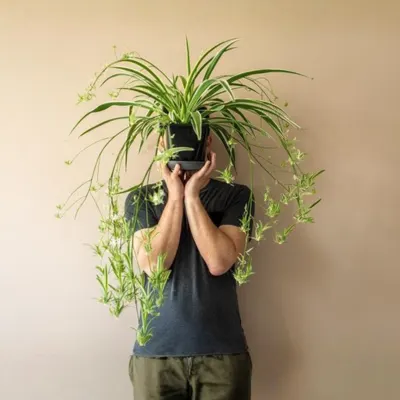
Looking to buy a healthy Spider Plant online in India? At Upjau, the best online plant nursery in India, we carefully source and pack every Spider Plant to ensure it reaches you healthy, vibrant, and ready to thrive. Whether you’re a beginner or an experienced plant parent, our quality plants and expert guidance make indoor gardening easy.
Whether you’re buying your first Spider Plant or adding another variety to your indoor garden, Upjau makes it simple to bring home a healthy, low-maintenance plant that will thrive for years.
Spider Plants are among the easiest indoor plants to grow and maintain. Give them well-draining soil, water only when needed, and place them in bright, indirect sunlight. If you’re wondering whether Spider Plants can tolerate low light, need direct sunlight, require repotting, or how quickly they grow, the answer is simple—most issues can be solved with proper care and a few small adjustments. Their low-maintenance nature, air-purifying qualities, and easy propagation make them an excellent choice for beginners and experienced gardeners alike. With the right care, your Spider Plant will reward you with healthy foliage and beautiful baby plantlets for many years.
Water only when the top inch of soil feels dry. The exact frequency depends on temperature, pot size, and season, but avoid constantly wet soil.
Wait until the plantlets develop small roots, cut them from the runner, and plant them in moist potting mix. Keep them in indirect light until established.
Yes. Spider Plants (Chlorophytum comosum) are considered non-toxic to cats and dogs, making them one of the best pet-friendly indoor plants for Indian homes.