Your cart is empty
Explore our collectionsCoupons
Order Summary
Total₹ 0

Hydrangeas are popular shrubs with colorful flowers that bloom through summer and into fall. There is no more dramatic shrub than the hydrangea. Hydrangeas are one of the most popular ornamental plants for Indian gardens/balconies owing to their giant globes and changing flower color from blue to pink to purple as per the soil pH. This article provides an all-in-one guide to hydrangea care, covering everything from soil to watering, pruning to propagation, and more – all in an Indian context.
Bigleaf Hydrangea (Hydrangea macrophylla): This is the most popular variety of Hydrangea that is known for its large and rounded flower clusters.
Panicle Hydrangea (Hydrangea paniculata): Known for cone-shaped flower clusters and greater cold tolerance, making it suitable for higher altitudes.
Smooth Hydrangea (Hydrangea arborescens): This variety is Native to North America and produces large white blooms and is fairly forgiving for beginners.
Climbing Hydrangea (Hydrangea anomala subsp. petiolaris): This is A vining variety that can be trained along walls, terraces, and balconies.
Oakleaf Hydrangea (Hydrangea quercifolia): Named for its oak-shaped leaves, this type offers attractive foliage colour in addition to its flowers.
| Type | Key feature | Indian growing note |
| Bigleaf Hydrangea | Large rounded flower heads | Needs protection from intense heat |
| Panicle Hydrangea | Cone-shaped flowers | Generally more cold tolerant |
| Smooth Hydrangea | Large white blooms | Adaptable, depending on climate |
| Climbing Hydrangea | Vining habit | Needs support and suitable climate |
| Oakleaf Hydrangea | Oak-like leaves | Better suited to cooler conditions |
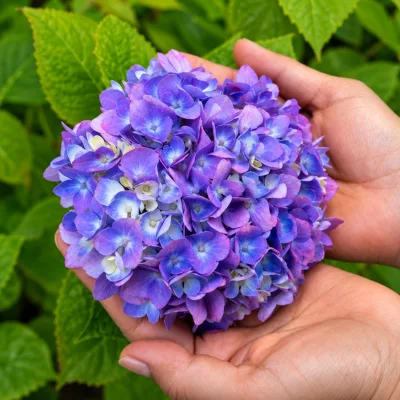
Caring for this French Hydrangea plant sapling is easy with the help of the following quick tips – simplified Hydrangea plant care in India: If you love some amazing cut flower arrangements at your place, then Hydrangea is the best plant for you.
The right hydrangea soil mix is one of the most important factors in growing healthy plants. Key points to keep in mind:
50% garden soil
25% compost/well-rotted manure
25% coco peat or perlite
Watering your Hydrangea is never an issue, as you can stick to watering your plant sapling twice or three times weekly. Avoid waterlogging at all times to prevent plant damage. Keep the soil moist during the Indian summer months, and make sure to increase watering frequency.
Understanding hydrangea light requirements helps prevent common issues like scorched leaves or poor blooming.
Feeding is a key part of any hydrangea plant care routine.
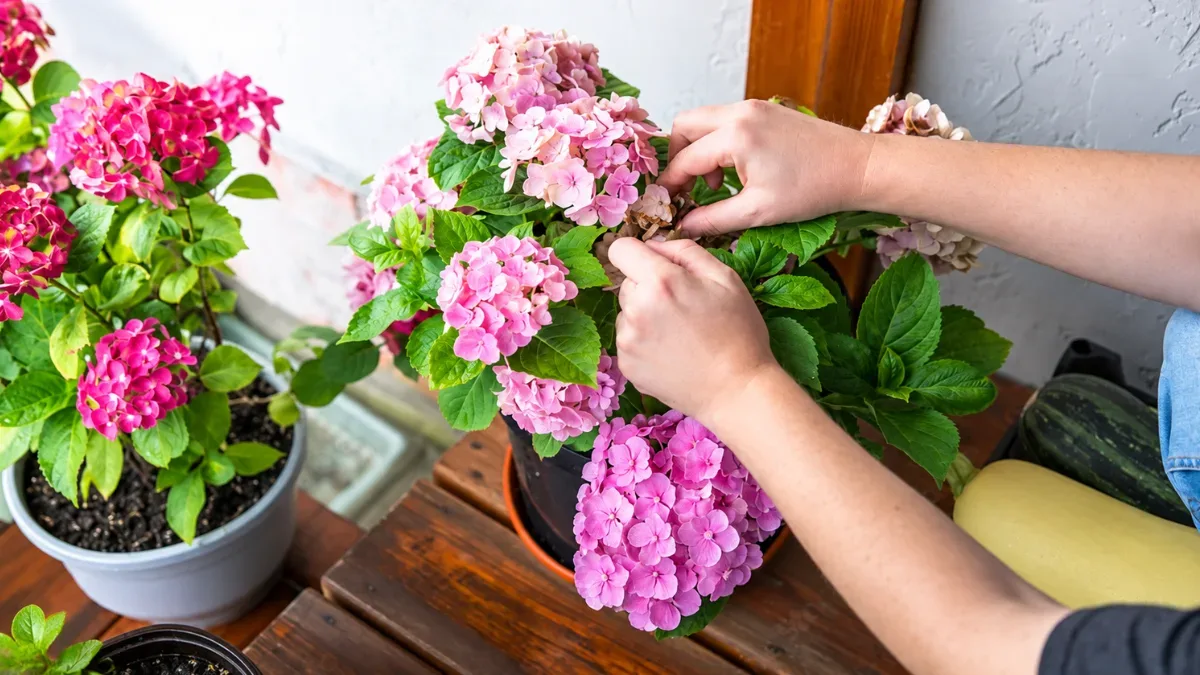
Pruning on the right time is essential to ensure that the plant produces the best growth and blooms. So, what you have to do during the pruning of this plant is always use sterilized scissors or cutters. Remove the dead leaves and branches. If you’re growing bigleaf or oakleaf varieties, remember they set their buds on old wood – meaning last year’s stems are what give you this year’s blooms. So prune these right after the flowers fade, not in winter or early spring. Just cut away the spent flower heads along with any stems that look dead, thin, or weak.
The Hydrangea Plant Saplings are basically living chemistry experiments. The color of the flowers? It all comes down to soil pH and how much Aluminium is floating around.
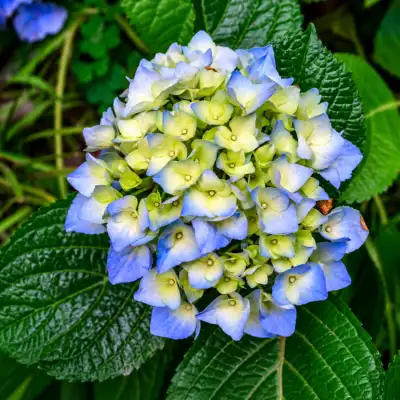
Most gardeners add hydrangeas to their gardens using cuttings to get a plant quickly and reliably, but with patience seeds are possible. After the flowering, gather seeds from the dried flower heads, and plant them in a seed tray of a light well-drained soil.
Place it in a warm location with indirect light and keep it moist, but not wet, until it has germinated (this may take a few weeks). Seed-grown hydrangeas will require more time to mature and bloom and the plant produced may not necessarily be a true colour or shape of the parent plant.
| Problems | Cause | Easy solutions |
| Wilting leaves | Underwatering or excessive heat | Water deeply and provide afternoon shade |
| Yellowing leaves | Overwatering or poor drainage | Improve soil drainage; reduce watering frequency |
| No flowers | Incorrect pruning time or too much shade | Prune according to bloom type |
| Leaf scorch | Too much direct afternoon sun | Move plant to a spot with filtered or morning light |
| Root rot | Waterlogged soil | Repot in well-draining mix; avoid standing water |
| Powdery mildew | High humidity with poor air circulation | Improve airflow; avoid overhead watering |
| Pale or faded blooms | Nutrient deficiency | Feed with balanced fertilizer during growing season |
Hydrangea propagation is no harder and more rewarding than propagating most other plants. Spring or early summer is the best time to take softwood cuttings, as they have a greater tendency to root. Choose a healthy stem and cut the lower leaves, after that, dip the end of the stem in the rooting powder. After planting, place the cutting in a moist, well-drained soil mix, and loosely cover with a plastic bag to keep the soil moist.
Healthy cutting → remove lower leaves → optional rooting hormone → plant in moist medium → maintain humidity → bright indirect light → wait for roots.
A good hydrangea care guide for beginners in India should consider the different climatic zones in the country. In warmer plains, hydrangeas prefer to be in containers and are allowed to retreat to cooler, shaded areas in the middle of summer. It is easier to grow them in the garden bed in cooler climates and in hill regions.
Yielding to the demands of the Indian climate involves careful monitoring of heat stress, humidity, and regular watering because the heat stress during Indian summers may prove to be more insurmountable to the hydrangea than the temperate climates of which they are native. Success can be achieved with mulching, partial shade, and frequent monitoring.
Finding a genuinely healthy hydrangea sapling at your local nursery isn’t always easy. Half the time the variety isn’t even labelled properly, and you’re left guessing whether it’ll bloom blue or pink, or how it’ll actually handle your local weather. This is where buying online from Upjau makes a real difference. Every plant is grown and packed with care, so what arrives at your doorstep isn’t some half-wilted sapling that’s been sitting in a nursery corner for weeks – it’s a healthy, well-rooted plant that’s actually ready to grow.
If you’re looking to buy hydrangea plant online in India, Upjau is one such online nursery gardeners often turn to, mainly for a few simple reasons: