
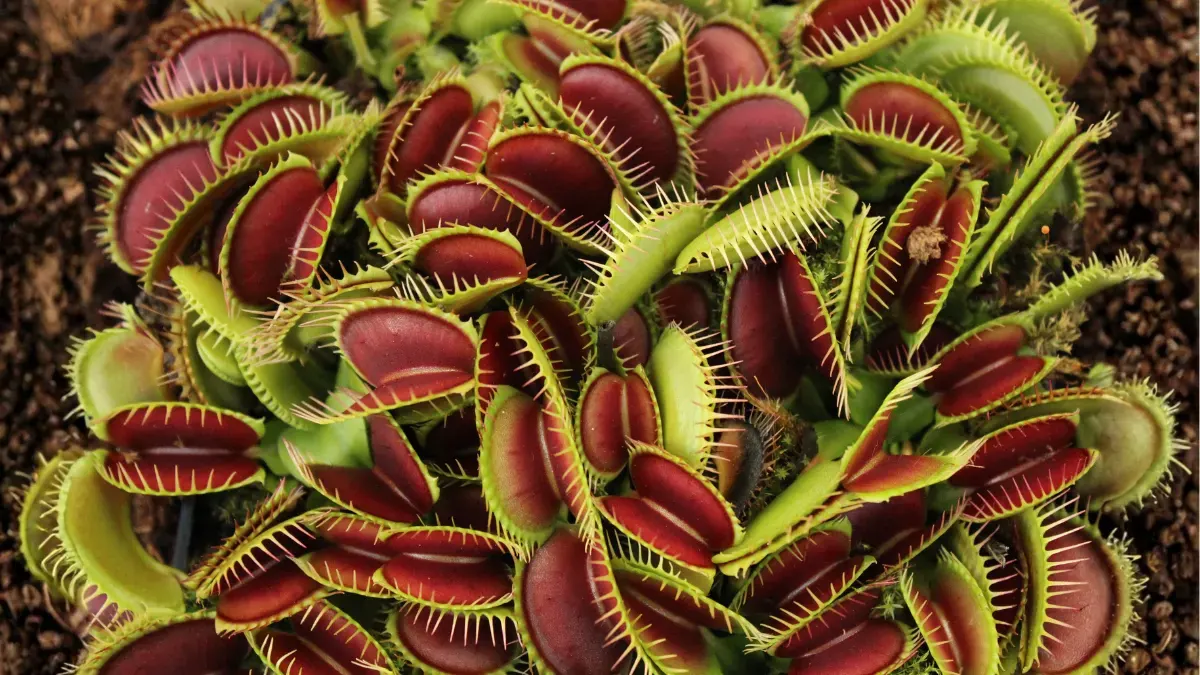
Nature has some strange surprises, and one of the strangest is a plant that eats bugs. Most plants get their food from soil and sunlight, but a small group decided to do things differently — they trap insects, digest them, and turn them into food. Carnivorous plants have the most bizarre adaptations to low-nutrient environments. These plants obtain some nutrients by trapping and digesting various invertebrates, and occasionally even small frogs and mammals.
In this blog, we’ll cover what carnivorous plants are, the different types of carnivorous plants, and everything about these types of plants. This guide will walk you through everything in simple, easy-to-follow words.
What Are Carnivorous Plants?
These are plants that catch and digest small insects to get extra nutrients along with their regular diet of sunlight and water. That’s really the heart of what carnivorous plants are and how they work — they haven’t given up on photosynthesis.
A normal plant would struggle there. So over thousands of years, these plants found a workaround — build a trap, catch an insect, and pull the missing nutrients straight from its body. It’s less about hunger and more about making the best of a tough environment.
Types of Carnivorous Plants
There isn’t just one kind of trap in the plant world. Here is a simple explanation of how these plants work. In fact, there are several types of carnivorous plants, and each one goes about hunting in its own way.
The Snap Trap:
- It works like a tiny cage or a book.
- When a bug steps inside and touches the tiny hairs, the leaf snaps shut instantly.
- The bug gets trapped inside.
The Pitfall Trap
- These plants look like deep cups or water jugs.
- They have sweet-smelling juice inside to attract bugs.
- The walls are very slippery, and the bug slips.
The Sticky Trap
- These plants have leaves covered in shiny, sticky glue.
- They get stuck instantly, and the plant slowly curls around them.
The Vacuum Trap
- These are tiny plants that live underwater.
- They have small bags that act like a vacuum cleaner.
- When a tiny water bug touches them, the bag opens.
The One-Way Maze Trap
- These plants have underground tubes with tiny hairs pointing inward.
- Small soil bugs can easily crawl inside, following the hairs.
- But because the hairs point backward, the bugs cannot turn around or crawl out.
Some Carnivorous plants:
For anyone putting together a carnivorous plants list, here are the ones worth knowing:
Pitcher Plants
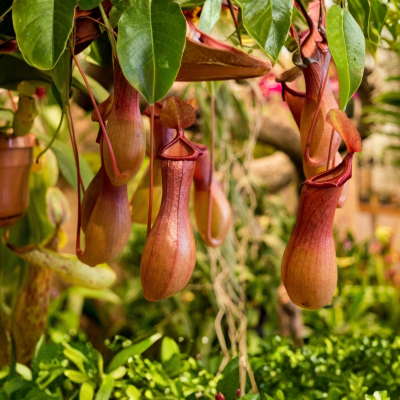
Pitcher plants have these deep, cup-like leaves that stay filled with liquid inside. When an insect crawls in, it can’t get a grip on the smooth walls, so it just slips and falls straight down — and once it’s in, there’s no climbing back out.
Venus Flytrap
Venus flytraps are examples of snap traps. A bit like a mousetrap, the hinged leaves will snap shut when a prey animal touches one of the sensitive hair-like projections on the inner surface of the leaf. The prey is then trapped behind the flytrap’s spiny ‘teeth’ and is subsequently digested by a red sap.
Sundew Plants
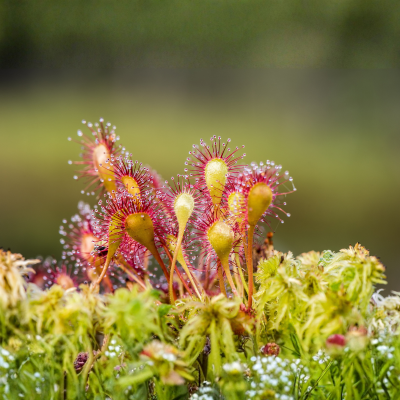
Sundews are flypaper traps, using sweet and sticky secretions to attract and ensnare their invertebrate prey. The sticky substance is produced by glands on their tentacle-like leaves, which move in response to contact with prey, coiling inwards to further trap and smother it.
Bladderworts
Bladderwort is a carnivorous pond plant. None of the UK’s carnivorous plants make themselves particularly obvious. The bladderworts, of which there are multiple British species, are even more obscure. It is almost translucent, a delicate mesh of pale yellow-green stems with hairy, unleaf-like leaves and no roots, which gives it little by way of surface area or substance.
How to Grow Carnivorous Plants
Soil: Prepare a soil mix by using these ingredients.
- 50% Pure Sphagnum Peat Moss
- 50% Horticultural Perlite
Watering: Watering should always be done with distilled or rainwater. Tap water carries minerals and salts that build up over time and slowly damage the plant.
Fertilizer: Carnivorous plants obtain nutrients from prey, but some cultivated carnivorous plants can also benefit from carefully applied, diluted foliar fertilizer. More importantly, fertilizer in the growing medium can damage many carnivorous plants.
Can Carnivorous Plants Live Indoors Without Direct Sunlight?
Carnivorous plants can grow indoors, but they still need plenty of light. Bright indirect light may work for some species, while others need several hours of strong sunlight or a suitable grow light. If light levels remain too low, growth and trap production can suffer.
Quick Comparison of Trap Types
| Trap Type | Mechanism | Example Plant | Speed |
| Snap Trap | Leaves snap shut on touch | Venus flytrap | Very Fast |
| Pitfall Trap | Insect falls into a liquid-filled cup | Pitcher plant | Passive |
| Sticky Trap | Insect gets stuck on a glue-like surface | Sundew plant | Slow |
| Sticky Trap | Insect gets stuck on a greasy leaf | Butterwort | Slow |
| Bladder Trap | Vacuum-like suction pulls insect in | Bladderwort | Very Fast |
| Lobster-Pot Trap | Insect enters but can’t find the way out | Cobra lily | Passive |
| Snap-Pitfall Trap | Combines snapping and falling | Waterwheel plant | Fast |
How Do Pitcher Plants Trap Insects Without Moving?
- Pitcher plants don’t move at all; they’re surprisingly effective hunters.
- Their trap works purely through gravity and slippery surfaces, no motion needed.
- The inner walls of the pitcher are smooth, sometimes with a fine waxy coating.
- An insect wandering in for nectar quickly loses its grip on these walls.
- It slides straight down into a pool of digestive liquid waiting at the bottom.
Difference Between Venus Flytrap and Pitcher Plant
| Feature | Venus Flytrap | Pitcher Plant |
| Trap Type | Snap trap | Pitfall trap |
| Movement | Closes quickly on touch | Doesn’t move at all |
| Trap Shape | Two hinged leaf lobes | Tube or cup-shaped leaf |
| Digestion Time | A few days to a week | Several days |
| Prey Size | Small to medium insects | Insects, occasionally small creatures |
| Native Region | Parts of the USA | Found across many regions worldwide |
| Beginner Friendly | Needs a bit more care | Generally easier to grow |
Carnivorous Plants for Home in India:
If you’re looking at carnivorous plants for home in India, there’s good news — several varieties adapt reasonably well to Indian conditions, especially in warmer, humid regions. Pitcher plants and sundews tend to be the easiest to start with indoors, provided they get enough light and the right watering routine. These days it’s also fairly easy to buy carnivorous plants online, with many nurseries offering a Venus flytrap plant or a pitcher plant online in India, often along with basic care instructions.
Do Carnivorous Plants Photosynthesize Like Normal Plants?
Yes, and this is something people often get wrong. Insects are a supplement, not the main course. Sunlight is still their primary source of energy, exactly like any other plant. Eating bugs just tops up the nutrients that poor soil can’t provide.
What Happens If You Touch a Venus Flytrap Without Feeding It?
The trap will likely still close if you touch the trigger hairs, even without real prey inside. It’ll usually reopen on its own after a day or two. But triggering it repeatedly for fun isn’t a great idea; each closing and reopening burns through the plant’s stored energy, and doing it too often can wear the plant down over time. It’s best left to close naturally, on its own terms.
Can You Grow Carnivorous Plants from Seeds at Home?
If you want to grow carnivorous plants at home with seeds, it takes real patience. Seeds need a consistently moist, nutrient-poor growing medium along with steady humidity, and germination alone can take anywhere from a few weeks to a couple of months.
Frequently Asked Questions:
- Are Carnivorous Plants Safe to Keep at Home?
Yes, carnivorous plants are completely safe. They only trap small insects, so they pose no threat to people or pets in your home.
- Where do carnivorous plants live?
They mostly grow in wet bogs, marshes, and wetlands with poor soil, found across North America, Southeast Asia, Australia, and parts of India.
- Can Carnivorous Plants Survive Without Insects?
Yes, they still get energy through photosynthesis, though missing insects means fewer nutrients and slightly slower growth over time.
- How Long Does It Take for a Venus Flytrap to Digest an Insect?
It takes a Venus flytrap about 5 to 12 days to fully digest an insect.
- What Is the Rarest Carnivorous Plant in the World?
The Attenborough’s pitcher plant, found only in the Philippines, is considered one of the rarest due to its very limited habitat.
- What Is the Lifespan of a Carnivorous Plant?
With proper care, many live several years, and some pitcher plant species can survive for decades.
