Your cart is empty
Explore our collectionsCoupons
Order Summary
Total₹ 0

Looking for a flowering climber for balcony or terrace that stays covered in flowers for months? The Mandevilla climber plant is a perfect choice for every plant lover. Mandevilla, also known as the Rock trumpet plant, it is one of the most popular tropical flowering plants which is popular among all the plant lovers and gardeners. If you live in an apartment with a small balcony or a big garden house, this is one of the best climbing plants.
In this guide, you’ll find simple tips on Mandevilla plant care — watering, sunlight, soil, common problems, and how it’s different from plants like Dipladenia and Allamanda.
| Features | Details |
| Botanical Name | Mandevilla spp. |
| Common name | Mandevilla, Rock Trumpet Vine |
| Plant type | Flowering climber / vine |
| Origin | South America |
| Leaves | Glossy, dark green, oval shaped |
| Plant growth rate | Fast |
| Flowers | Trumpet-shaped, in pink, red, white, yellow |
| Growth habit | Twining climber |
| Season | Spring to early winter |
| Sunlight | 5-6 hours bright or indirect light |
| Watering | Regular in summer, moderate in monsoon, light in winter |
| Fertilizer | Balanced liquid fertilizer every 2–4 weeks during the growing season |
| Pruning | Prune lightly in late winter or early spring before new growth begins. |
| Temperature | 15°C to 35°C |
| Height | 6 to 10 feet when climbing |
| Lifespan | Perennial, lives many years with care |
| Best suited for | Balconies, terraces, gardens, pots |
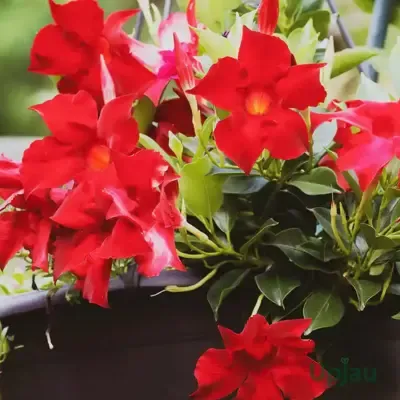
Yes, Mandevilla is easy to grow, making it an excellent choice for beginners and busy plant parents. It does not need too much attention once it settles into a pot or the ground. The main things it needs are plenty of sunlight, regular watering, and well-draining soil. If you give it these basic things, this Mandevilla vine plant will reward you with flowers for many months.
Pot Selection: Growing Mandevilla in pots perfect for those people who have limited space and they are living in flats or homes with limited garden space. Select a 12 to 14 inches pot which have good drainage holes. Pots also make it easy to move the plant indoors during very hot afternoons or cold winter nights.
Proper watering in the plant is one of the most important parts if you want to do Mandevilla plant care, and you can water in your plant with the Indian seasons.
Summer: Water when the top 1–2 inches of soil feel dry.
Monsoon: Reduce watering in monsoon because rain keeps the soil moist
Winter: Water only once or twice a week
The sunlight is also playing an important role in plant’s growth. The Mandevilla tropical flowering plant loves bright sunlight. At least 6 hours of bright morning sunlight for best flowering. It is the perfect choice for those people who are looking for an excellent flowering climber vine plant for balconies, terraces, and outdoor gardens. because these spots get good morning sun. Good sunlight also helps the plant produce more vibrant pink and red blooms.
The soil for the Mandevilla Flowering climber should be loose. Avoid heavy soil because it holds too much water, which may cause root rot. A good soil mix can include –
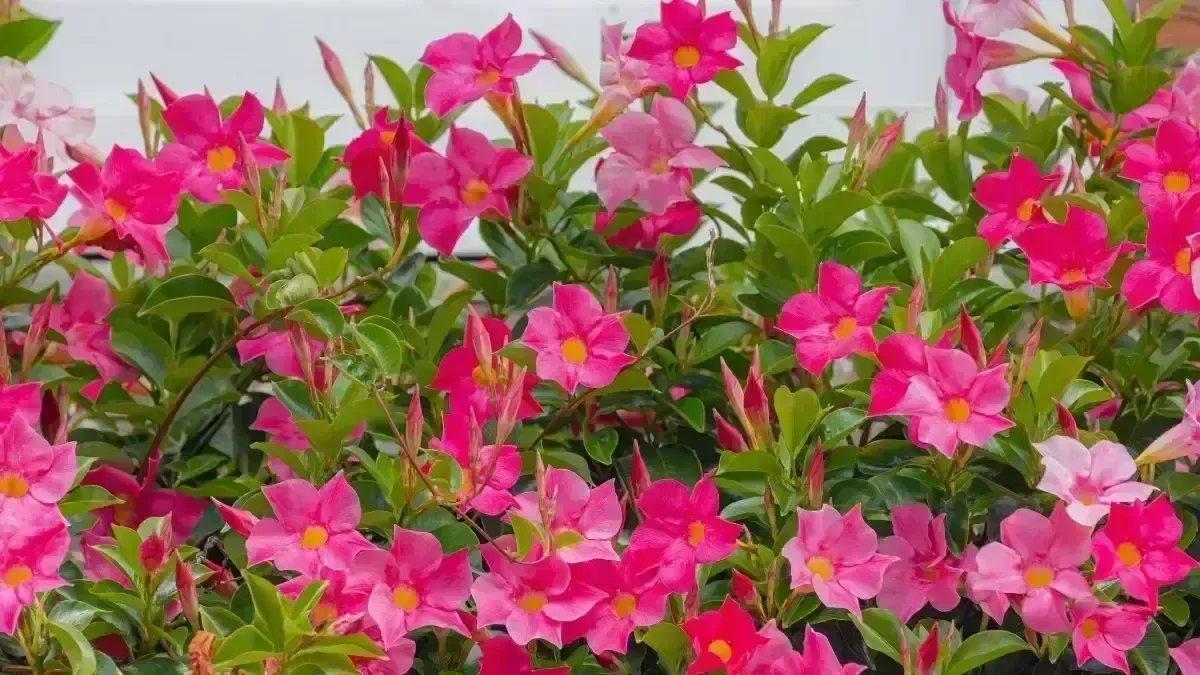
The flowers of Mandevilla climber plant bloom in red, pink, yellow and white colors. They add beauty in your space and also, they are perfect for balcony, terraces, and garden. so here is the month-wise blooming guide for India:
The best time to plant Mandevilla is during spring, from February to April, or in the monsoon season in India. In monsoon there are the warm temperatures and enough humidity to establish strong roots before the peak summer heat or the cold winter arrives.
Mandevilla hates the cold weather. In most parts of India, it survives in winter fine since temperatures stay mild. In northern regions where winter nights get very cold, the plant can get damaged at that time. So, winter is not good for the plant.
| Problem | Cause | Solution |
| Yellow leaves | Overwatering | Reduce watering |
| No flowers | Low sunlight | Move to a sunnier spot |
| Leggy growth | Insufficient light | Increase sun exposure |
| Wilting despite watering | Root rot from soggy soil | Check roots |
| Pests like aphids or mealybugs | Weak plant or overcrowding | Spray with neem oil solution |
| Leaf drops in winter | Cold stress | Move indoors or to a warmer sheltered spot |
Yellow leaves of Mandevilla are the sign of overwatering. When soil stays wet for too long, so roots cannot breathe and start to rot, that’s why the leaves turn in yellowish color. And also, the poor drainage and lack of nutrients is the reason of yellow leaves.
| Feature | Mandevilla | Dipladenia |
| Growth habit | Strong, tall climbing vine | Compact, bushy, sometimes trailing |
| Size | Grows much taller with support | Stays smaller, fits in pots and hanging baskets |
| Best for | Tall trellis covered in flowers | Small balconies, compact spaces |
| Flowers | Trumpet-shaped | Trumpet-shaped |
| Watering needs | Similar | Similar |
| Sunlight needs | Similar | Similar |
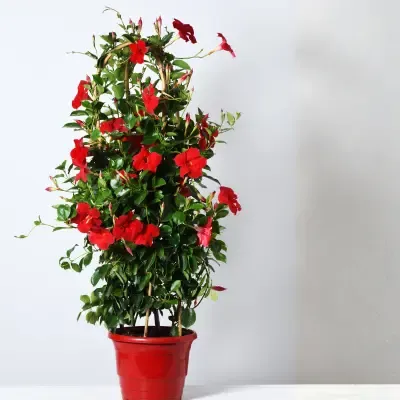
Both are popular flowering climbers, but they suit different needs in India.
If you want a flower plant for your balcony without any stress Mandevillea is perfect for your space. if we talk about the Mandevilla plant care so this plant grows well in very little care. For those with more space who want bold yellow color and faster coverage, Allamanda can be a good option.
Every plant lover waits for the Flowers season of the plant. so, if your Mandeville is not flowering so this is so painful. check these common causes:
When you Buy Mandevilla Climber Plant Online, the plant quality matters just as much as how you take care of it later in India. Mandevilla is one of the best fast-growing flowering climbers for Indian gardens and balconies. Here’s why Upjau is worth trying:
Healthy, well-rooted plants: Upjau grows its plants with proper care before shipping, so you get a strong and healthy plant.
Safe packaging: Plants are packed with care so your plant reaches you safely at your doorstep without damage.
Color options: We offer the Mandevilla plant in many different colors like red, pink, white or other shades based on what suits your balcony or terrace.
Suited for Indian weather: Upjau picks varieties that already grow well in Indian conditions, so your plant settles into its new home faster.
Care tips included: You also get simple care instructions with the plant, for those people who are beginner in gardening this is very helpful.
It can survive in Low light, but won’t grow well. Leaves turn yellowish, stems get weak, and flowers barely show up.
Yes, it’s a perennial plant. With basic care, it keeps growing and flowering year after year, not just once.
Usually, 8 to 10 years or more with proper care, if you repot it sometimes and give it enough sun and water.
It’s trumpet-shaped with five open petals, about 2-3 inches wide, mostly in pink, red, or white.
Yes, but only near a bright window with a few hours of direct sun daily. Without enough light, it won’t flower well.