

Every year, we hand out the same boxes of sweets and dry fruits, and most of them end up forgotten in a cupboard. So don’t be late and this year, try something different as a gift because plants are the best eco-friendly option. If you choose plants to gift on Diwali it gives your loved ones something that grows, freshens their home, and reminds them of you long after the festivals.
This guide covers the best indoor plants for Diwali gifting. Whether you want Diwali gifts under 199 for a big list of relatives, or Diwali gifts under 499 for someone special, there is a plant here for every budget. Each plant comes with quick care tips, including the right soil, so you can pass them on to the person receiving it.
Why Are Plants a Thoughtful Diwali Gift?
Plants make unique Diwali gift ideas for several reasons:
- Eco-friendly Diwali gift ideas: No plastic wrapping or single-use decor. A potted plant is a gift that gives back to the environment.
- Lucky plants for Diwali gifts: Many plants are traditionally linked with prosperity, positivity, and good fortune.
- Budget-friendly: Affordable Diwali gift ideas don’t have to look cheap. A small, well-presented succulent in a decorated pot looks thoughtful and premium.
- Long-lasting: Unlike sweets, a plant keeps giving for months or years.
If you are looking for budget Diwali gifts for friends and family, indoor plants as Diwali return gifts, or a Diwali return gift idea under 200, small succulents and cacti are the easiest answer.
Plant Gifts Under 199 and 499 Rupees
These are perfect if you are shopping for many people. They also work as Diwali return gift ideas under 200 and 499 for guests, neighbors, and colleagues.
1. Lithops Plant
Lithops look like small pebbles, which makes them a real conversation starter. They are among the most unique Diwali gift ideas on this list and a great pick among succulents for gifting.
- Light: Bright light, with a few hours of direct sun.
- Water: Very sparingly, only when the plant looks slightly wrinkled. Never water during the shedding phase, when old leaves are splitting.
- Soil: Use a well-draining mix. Use coarse sand, perlite or pumice with a little coco peat.
2. Tillandsia Air Plant
Air plants need no soil at all. You can place them in a glass bowl, on a shell, or on a wooden stand, which makes them a neat, modern gift and one of the most low-maintenance indoor plants for gifting.
- Light: Bright, indirect light with good airflow.
- Water: Soak for 15 to 20 minutes once a week. Shake off excess water and dry upside down so the base doesn’t rot.
3. Haworthia Plant
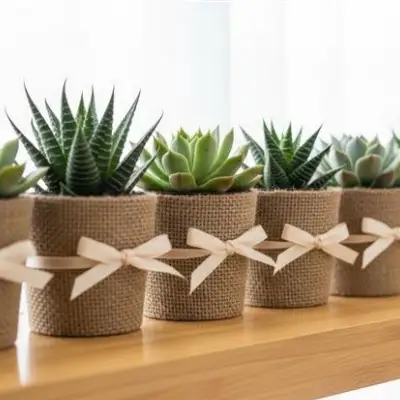
Haworthia is a small, striped succulent that stays compact and handles low light well. It is an ideal easy-care plant to gift beginners on Diwali.
- Light: Bright indirect light. Harsh afternoon sun can scorch it.
- Water: Once the soil is fully dry, roughly every 10 to 14 days.
- Soil: A cactus or succulent mix, or make your own with 50% regular potting soil and 50% coarse sand or perlite. Use a pot with a drainage hole.
4. Cylindrical Snake Plant
The cylindrical snake plant has upright, round, spear-like leaves and an architectural look. It is popular as an air-purifying plant and is widely considered one of the lucky indoor plants to gift family on Diwali, as many people believe it brings positive energy.
- Light: Tolerates low light and neglect very well.
- Water: Every 2 to 3 weeks, and less in winter. Overwatering is the only real way to harm it.
- Soil: A sandy, well-draining mix. Combine garden soil, cocopeat, and coarse sand in equal parts.
5. Adenium
Adenium is a hardy succulent that grows a thick stem that is called caudex and later produces bright flowers. It makes a great plant gift with long-term payoff.
- Light: At least 4 to 5 hours of direct sunlight.
- Water: Only when the soil is completely dry.
- Soil: Loose, sandy and well-draining. Mix equal parts garden soil, coarse sand and compost or cocopeat, and add a handful of perlite or small stones for extra drainage.
6. Aglaonema Lipstick Plant Sapling
With dark green leaves edged in red, the Aglaonema Lipstick suits the festive mood perfectly. It is also regarded as one of the lucky plants for Diwali gift lists, and it is a good beginner-friendly plant.
- Light: Medium to low indirect light.
- Water: When the top inch of soil is dry. Wipe the leaves occasionally to keep the colour bright.
- Soil: A light, loamy, and well-draining mix. Use garden soil with cocopeat and a little compost.
7. Hoya Green Carnosa Plant
Hoya Carnosa, also called the wax plant, has thick, waxy leaves. Mature plants produce clusters of fragrant, and star-shaped flowers that give an attractive look to your space. A small cutting often fits within Diwali gifts.
- Light: Bright indirect light helps it grow and flower.
- Water: Let the soil dry between waterings. Don’t cut the old flower stalks, as new blooms appear on them.
- Soil: A chunky, airy mix. Combine cocopeat and perlite.
8. Alocasia Cucullata Plant
Also called the Buddha’s Palm or Chinese Taro, it has glossy, heart-shaped leaves and is often considered a lucky plant. Many people keep it near the entrance for good fortune.
- Light: Bright, indirect light.
- Water: Keep the soil lightly moist but never soggy. Wipe the leaves regularly to remove dust.
- Soil: A rich, loose, and well-draining mix. Use garden soil, cocopeat, compost and perlite in equal parts.
9. Adenium Helen (Triple Petal Wine Red)
This variety is a showstopper. The rich wine-red, layered petals of Adenium make it one of the most striking plant gifts under 500 rupees. The Adenium is perfect for those people who love gardening and also bring flowers and plants home.
- Light: Strong sunlight, so a sunny balcony or window is ideal.
- Water: Water deeply, but only after the soil has dried out completely. Feed with a mild flowering fertilizer in the growing season.
- Soil: A gritty, sandy mix with excellent drainage. Use garden soil, coarse sand, compost, and perlite
10. Poinsettia (Christmas Star / Euphorbia pulcherrima)

Poinsettia is known for its bright red leaves, which look beautiful in the festive season. It brings instant colour to any corner and is one of the best festive gifting ideas for Diwali, since it is in full colour around October and November.
- Light: Bright, indirect light for 4 to 6 hours a day. A spot near an east-facing window is ideal.
- Water: When the top inch of soil is dry. Don’t let water collect in the pot.
- Soil: A light, well-draining mix. Combine regular potting soil, cocopeat and perlite or coarse sand, and use a pot with drainage holes.
11. Alocasia Dragon Scale
With textured, silvery-green leaves that resemble dragon scales, this plant looks rare and exotic. It is an excellent pick if you want unique Diwali gift ideas that really stand out.
- Light: Bright indirect light. Avoid direct sun.
- Water: Keep soil evenly moist, and mist occasionally in dry weather. It may go dormant in winter, which is normal.
- Soil: Use cocopeat, perlite, orchid bark, and a little compost.
12. Philodendron Billietiae
This is a collector’s favorite, with glossy green leaves and bright orange-yellow stems. Rare philodendrons often cost more, but small plants and cuttings can sometimes be found around the ₹499 mark.
- Light: Bright indirect light keeps the orange stems vibrant.
- Water: Water when the top layer of soil dries out. Provide a moss pole as it grows.
- Soil: A loose, chunky mix of coco peat, orchid bark, perlite, and a little compost.
Which Plant Should You Gift?
| Recipient | Best Plant Choice | Why |
| Busy professionals | Snake Plant, Haworthia | Almost no care needed |
| Beginners | Aglaonema, Haworthia, Air Plant | Forgiving and hardy |
| Plant collectors | Philodendron Billietiae, Alocasia Dragon Scale | Rare and eye-catching |
| Parents and elders | Cylindrical Snake Plant, Alocasia Cucullata | Traditionally seen as lucky |
| Colleagues and neighbours | Lithops, Tillandsia | Cheap, compact, easy to hand out |
| Flower lovers | Adenium Helen, Hoya Carnosa | Beautiful blooms |
How to Make Your Diwali Plant Gift Look Festive?
A plain nursery pot won’t feel like a gift, so a little presentation goes a long way, and none of it needs to be expensive:
- Decorate the pot: Decorate the pot with hand-painted designs, jute rope or a few marigold-colored ribbons.
- Use eco-friendly packaging: Package the plant in craft paper or cloth wraps instead of plastic.
- Add a small diya or tealight: Add a diya next to the plant for a festive look.
- Include a care card: Add light, watering, and soil instructions. This is especially helpful for festive gifting ideas aimed at first-time plant owners.
- Pair with sweets: Add a small box of sweets and a plant for a combo gift that stays under budget.
Final Thoughts on Diwali Plant Gifting
Gifting plants on this festival is a simple way to make Diwali more meaningful and sustainable. From tiny succulents for gifting to showy foliage plants, the options above fit every budget. Whether you choose Diwali gifts under 199 for your whole circle or Diwali gifts under 499 for someone close, you are giving something alive that carries your good wishes forward.
So skip the usual boxes this year and pick one of these best indoor plants for Diwali gifting. It’s a gift that keeps growing.
Frequently Asked Questions:
- Which indoor plant is a good Diwali gift under ₹500?
Adenium Helen, Alocasia cucullata, Poinsettia, and Jade Plant are good Diwali gifts under ₹500. They look attractive, suit most homes, and are also very beginner-friendly.
- What can I gift for Diwali under ₹200?
A small Haworthia, Tillandsia air plant, or snake plant in a decorated pot makes a simple, thoughtful gift under ₹200 that anyone can look after.
- Which plants make good Diwali return gifts?
Small succulents like Lithops, Echeveria, or a Money Plant in a pot work well as return gifts. They are affordable, light, and easy to carry.
- Which lucky plant is best to gift on Diwali?
Money Plant, Jade Plant, and Snake Plant are the most popular lucky plants. Many people believe they bring good luck and positive energy to the home.
- Can I gift a plant sapling, and will it survive in a pot?
Yes, you can. Adenium, Aglaonema, and Hoya grow well in pots. Use a pot with drainage holes, well-draining soil, and avoid overwatering early.
