
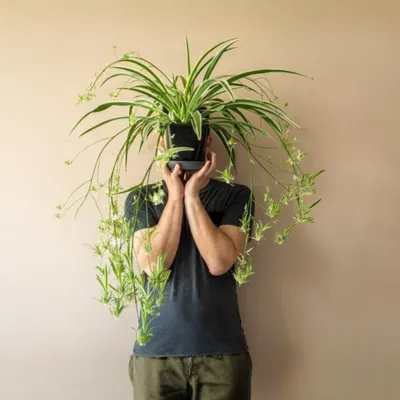
If you have ever walked into a friend’s balcony, office, or home and spotted a bunch of arching green leaves with tiny white “babies” dangling from long stems, chances are you were looking at a Spider Plant. It is one of the most popular indoor plants found in homes, offices, kitchen windows, hanging baskets, and balconies. And there is a good reason for that. It survives neglect, helps improve indoor air quality, and multiplies itself for free through its baby plantlets.
In this guide, we’ll walk you through what a Spider Plant actually is, the most popular Spider Plant varieties, a complete Spider Plant indoor care guide, and a simple step-by-step method to grow healthy Chlorophytum comosum varieties at home. Even if you’ve never kept a houseplant alive before, this beginner-friendly guide from Upjau will help you choose the best Spider Plant for your home.
What is a Spider Plant?
The Spider Plant, botanically known as Chlorophytum comosum, is a perennial evergreen houseplant. It gets its common name from the small plantlets—commonly called “spiderettes” or baby plants—that grow on long, arching stems and hang down from the mother plant.
It belongs to the Asparagaceae family and is loved by gardeners around the world for several reasons:
- It is extremely low-maintenance and forgiving of occasional missed watering.
- It grows well in both indoor and semi-outdoor conditions.
- It propagates easily through its baby plantlets, allowing one plant to become many.
- It became widely known after being included in NASA’s Clean Air Study, which examined how certain houseplants interact with indoor air pollutants under controlled conditions.
- It is considered one of the best pet-friendly indoor plants, as it is non-toxic to cats and dogs.
In Indian climates, Spider Plants thrive because they enjoy warm temperatures, moderate humidity, and bright indirect light—conditions commonly found in many Indian homes throughout the year. This is one of the reasons they are consistently ranked among the best Spider Plants for home gardening in India.
Varieties of Spider Plants for Indian Gardens
In this guide, we’ll explore 10 popular varieties of Spider Plants that are among the most loved choices for plant collectors and indoor gardeners in India.
1. Curly Spider Plant
The Curly Spider Plant is one of the most eye-catching varieties you can bring home. Its twisted, curly leaves give the plant a unique and attractive appearance. This compact, bouquet-like shape makes it a favourite for small pots, office desks, and gifting. The Curly Spider Plant is just as easy to care for as the classic Spider Plant, making it perfect for beginners.
2. Green Spider Plant (Chlorophytum comosum)
The Green Spider Plant is the original and most basic variety of Spider Plant. Its solid green, strap-like leaves arch gracefully from the base, creating a lush and elegant look. Since it has no variegation, it is slightly hardier and adapts well to different indoor conditions. It is an excellent choice for beginners looking for a beautiful green indoor plant.
Buy Green Spider Plant online in India – Add to cart !
3. Variegated Spider Plant
The Variegated Spider Plant is one of the most common and beautiful Spider Plant varieties available in Indian nurseries. Its creamy white stripe running through the centre of each leaf, bordered by green edges, makes it highly attractive. This variety is ideal for hanging baskets, office desks, and as a thoughtful gift for plant lovers.
4. Reverse Spider Plant
The Reverse Spider Plant features the opposite colour pattern of the Vittatum variety. The leaf edges are creamy white, while the centre remains green. Although less common in nurseries, it is a favourite among collectors looking for a unique alternative to the standard variegated Spider Plant.
5. Zebra Spider Plant
The Zebra Spider Plant has narrow leaves with distinctive striping, giving it a slightly wild and textured appearance. Its compact growth habit makes it an excellent choice for smaller pots, tabletops, and desk arrangements.
6. Bonnie Spider Plant
If you love curly foliage but want something different from the Curly Spider Plant, the Bonnie Spider Plant is a great choice. Its leaves curl and twist inward, giving it a compact, spiral-shaped appearance. It is especially popular for small indoor spaces and hanging baskets.
7. Ocean Spider Plant
The Ocean Spider Plant is a dwarf variety with short, broad leaves and soft variegation. Its compact size makes it perfect for small pots, shelves, desktops, and indoor décor.
8. Hawaiian Spider Plant
The Hawaiian Spider Plant is known for its bright golden-green foliage. It has more vibrant colouring than many other varieties and grows slowly while maintaining a compact shape. It performs best in bright, indirect light, making it an excellent choice for indoor corners.
9. Spider Flower / Bichetii
The Spider Flower (Bichetii) has thin, grass-like leaves that grow in neat clumps. It forms a dense, compact plant and is commonly used as a border or edging plant in Indian gardens. It also works well in containers and landscape planting.
10. Mandaianum Spider Plant
The Mandaianum Spider Plant features narrow leaves with a yellow-green centre stripe. It is a rare and compact variety, making it an excellent choice for miniature gardens, desktops, and small indoor spaces.
Green Spider Plant vs Variegated: Which Should You Choose?
One question we hear often is: Green Spider Plant vs Variegated Spider Plant—which one should you choose? Here’s a quick comparison:
- Green Spider Plant varieties are generally hardier and tolerate lower light conditions better.
- Variegated Spider Plant varieties are more decorative, with attractive white and green striped leaves, but they require brighter indirect light to maintain their variegation.
How to Grow Your Spider Plant (Chlorophytum comosum) at Home – A Step-by-Step Guide for Beginners
Let’s go step by step and learn how to grow a healthy Spider Plant at home.
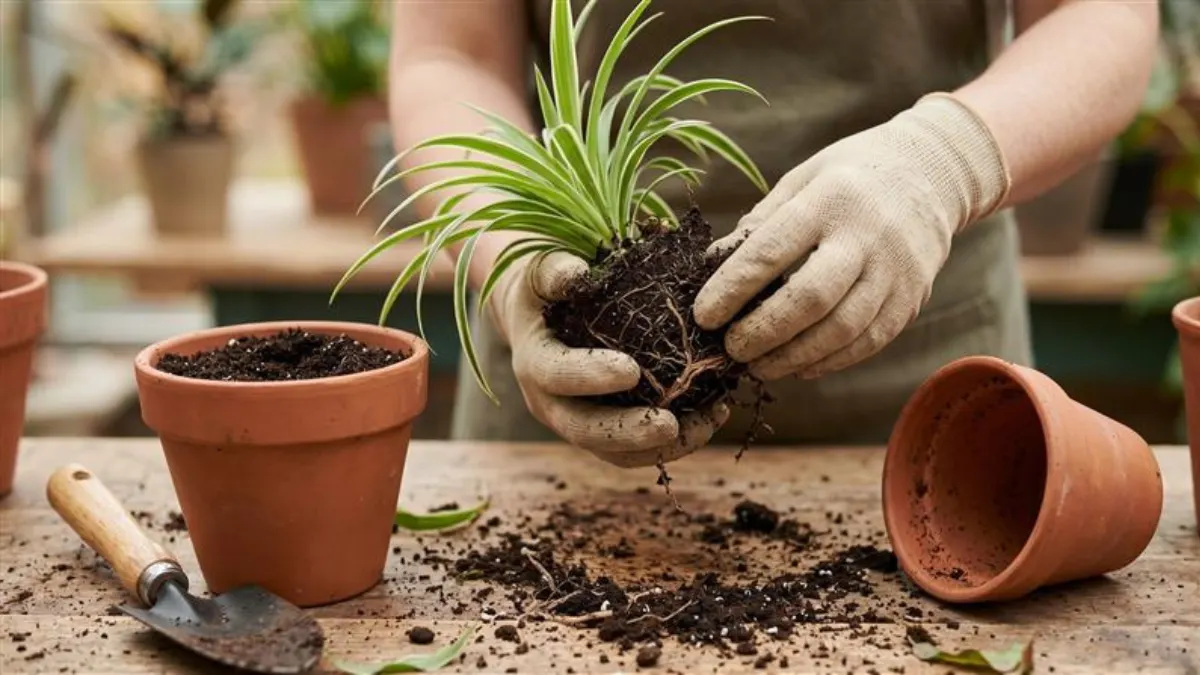
Select the Right Pot
Choose a terracotta, clay, or hanging pot with proper drainage holes. These pots provide good airflow and help prevent waterlogging.
Soil
Prepare a well-draining soil mix using:
- 50% garden soil
- 20% cocopeat or coco coir
- 20% compost or vermicompost
- 10% perlite for better drainage
Planting
- Remove the Spider Plant carefully from its nursery bag or previous pot.
- Fill the new pot with the prepared soil mix.
- Place the Spider Plant upright in the centre of the pot.
- Cover the roots with soil and gently press it down.
- Water lightly after planting.
Watering
A simple Spider Plant watering schedule for India is:
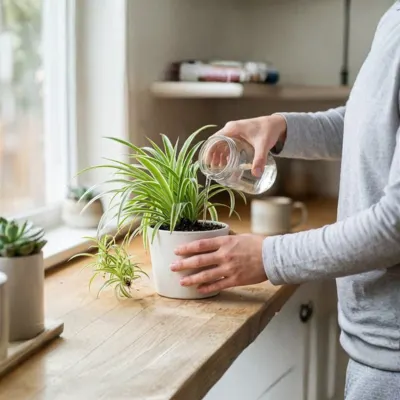
- Summer (April–June): Water every 5–7 days, as the soil dries out faster.
- Monsoon (July–September): Water every 8–10 days, as humidity keeps the soil moist for longer.
- Winter (November–February): Water every 12–15 days, as plant growth slows down.
Tip: Always check the top 1–2 inches of soil before watering. Water only when the soil feels dry.
Fertilizers
- Feed your Spider Plant with a diluted liquid fertilizer once a month during the growing season.
- A balanced NPK fertilizer or organic options like vermicompost tea work well.
- Avoid over-fertilizing, as Spider Plants are sensitive to salt buildup, which can cause brown leaf tips.
Light Requirement
Keep your Spider Plant in bright, indirect sunlight. Place it near an east-facing or north-facing window for the best growth. Avoid prolonged direct afternoon sunlight, as it may scorch the leaves.
How to Prune a Spider Plant
- Remove brown leaf tips using clean scissors.
- Trim dead or damaged leaves from the base.
- Remove excess baby plants (spiderettes) if you want the parent plant to produce fuller foliage.
Benefits of Spider Plant
- Helps purify indoor air by filtering common pollutants.
- One of the easiest low-maintenance indoor plants.
- Non-toxic to cats and dogs, making it a pet-friendly houseplant.
- Easy to propagate through spiderettes in water or soil.
- Looks beautiful in hanging baskets, tabletops, and indoor décor.
- Fast-growing and rewards beginners with healthy new growth.
Best Place to Keep a Spider Plant at Home
Spider Plants grow best in:
- Hanging baskets on balconies, porches, or kitchen windows.
- Bookshelves or elevated surfaces in the living room.
- Bathrooms with a window, where they benefit from extra humidity.
Common Problems & Easy Solutions of Spider Plant
| Problem | Cause | Easy Solution |
|---|---|---|
| Brown leaf tips | Over-fertilizing or salt buildup | Reduce fertilizer application and flush the soil occasionally |
| Yellowing leaves | Overwatering | Allow the soil to dry before watering again |
| Pale or faded variegation | Insufficient light | Move the plant to a brighter spot with indirect sunlight |
| Curling leaves | Underwatering | Check soil moisture and water when the topsoil is dry |
| Pest issues | Spider mites or mealybugs | Spray neem oil or insecticidal soap |
| Mushy roots | Root rot due to poor drainage | Repot into a fresh, well-draining soil mix |
Why Buy a Spider Plant from Upjau?
At Upjau, the best online plant nursery in India, we source and pack every Spider Plant with the same care we’d want for our own homes. Whether you’re buying your first Spider Plant or adding a new variety to your indoor garden, here’s what you can expect:
- Healthy, well-rooted plants that are ready to thrive in Indian growing conditions from day one.
- Careful packaging to ensure your plant reaches you safely and in excellent condition.
- Expert growing guidance and support, so you’re never left guessing.
- Beginner-friendly plants that are easy to grow and maintain.
- Pest-free plants with healthy root systems for better growth.
Whether you’re picking up your first Curly Spider Plant, exploring different Spider Plant varieties in India, or looking for one of the easiest indoor plants for beginners, Upjau makes it simple to bring home a healthy plant that will thrive. Along with Spider Plants, Upjau also offers a wide range of indoor plants, outdoor plants, fruit plants, flowering plants, seeds, bulbs, saplings, and gardening essentials at affordable prices. Explore our collection today and bring home healthy, beautiful plants delivered safely across India.
Frequently Asked Questions
Is a Spider Plant lucky for the home?
Yes, many people believe a Spider Plant brings positive energy and good luck to the home. It is also valued as an air-purifying indoor plant that helps create a fresh and pleasant living environment.
Can you sleep with a Spider Plant in your room?
Yes, it’s completely safe to keep a Spider Plant in your bedroom. It is a non-toxic indoor plant that does not emit harmful fumes and is commonly grown as an air-purifying houseplant.
Is it good to keep a Spider Plant at home?
Absolutely. Spider Plants are low-maintenance, pet-friendly, air-purifying indoor plants that are easy to grow. They also add a fresh, calming touch to your home décor.
What is the lifespan of a Spider Plant?
With proper care, a healthy Spider Plant can live for 20 years or more while continuously producing new plantlets.
